

Introduction
The holiday season brings increased activity to commercial properties. Shopping centres become busier, restaurants serve more customers, warehouses handle additional deliveries, and businesses often experience higher foot traffic than usual. However, along with the seasonal increase in human activity, property managers may notice another unexpected visitor: large groups of seagulls gathering around their buildings.
Seagulls gathering around commercial buildings during the holiday season is often connected to increased food availability, accessible waste, sheltered resting areas, and seasonal changes in bird behaviour. Shopping centers, restaurants, distribution facilities, parking lots, and commercial rooftops can provide several of these attractions in one location.
What might begin with a few birds resting on a rooftop can develop into a recurring problem involving large flocks, noisy activity, droppings, nesting concerns, and increased cleaning requirements. For commercial property owners and facility managers, understanding why seagulls gather during the holidays is an important first step toward managing the problem. Simply chasing birds away may provide temporary relief, but it does not necessarily address the conditions encouraging them to return. In this guide, we explore why seagulls are attracted to commercial buildings during the holiday season, which property features make certain locations appealing, what problems large gatherings can create, and how businesses can use practical, humane bird deterrent strategies to discourage repeated activity.
Why Do Seagulls Gather Around Commercial Buildings During the Holiday Season?
Seagulls are adaptable birds that can take advantage of different food sources and resting environments. Although they are commonly associated with beaches, coastlines, and waterways, many gull species also thrive in urban and suburban environments. Commercial properties can offer a combination of resources that makes them attractive gathering locations. During the holiday season, these resources may become more readily available because of increased business activity, larger quantities of waste, and changes in how outdoor spaces are used. Here are the main reasons commercial buildings may experience increased seagull activity.
1. Increased Food Waste Around Shopping Centres and Restaurants
Food availability is one of the most important factors influencing where gulls gather. During the holiday season, restaurants, food courts, shopping centres, hotels, and entertainment venues often experience increased customer activity. More visitors can mean more discarded food, overflowing waste containers, and food scraps around outdoor seating areas.
Seagulls are opportunistic feeders. They can take advantage of accessible food sources, including:
Discarded takeaway meals.
Food scraps near restaurant entrances.
Waste left in uncovered bins.
Overflowing commercial dumpsters.
Food scattered around parking lots.
Outdoor dining areas.
Poorly managed waste collection points.
For example, a shopping centre with several restaurants may unintentionally provide a consistent food source if waste containers are frequently left open or food debris accumulates around disposal areas. Once gulls recognise that food is regularly available at a particular location, they may return repeatedly. The problem is not necessarily limited to the building itself. Nearby restaurants, public food areas, parking facilities, and waste collection zones can also contribute to bird activity around a commercial property.
Learn more about why seagulls gather around commercial loading bays early in the morning, where accessible food and waste can contribute to recurring bird activity.
2. Commercial Rooftops Provide Safe Resting Areas
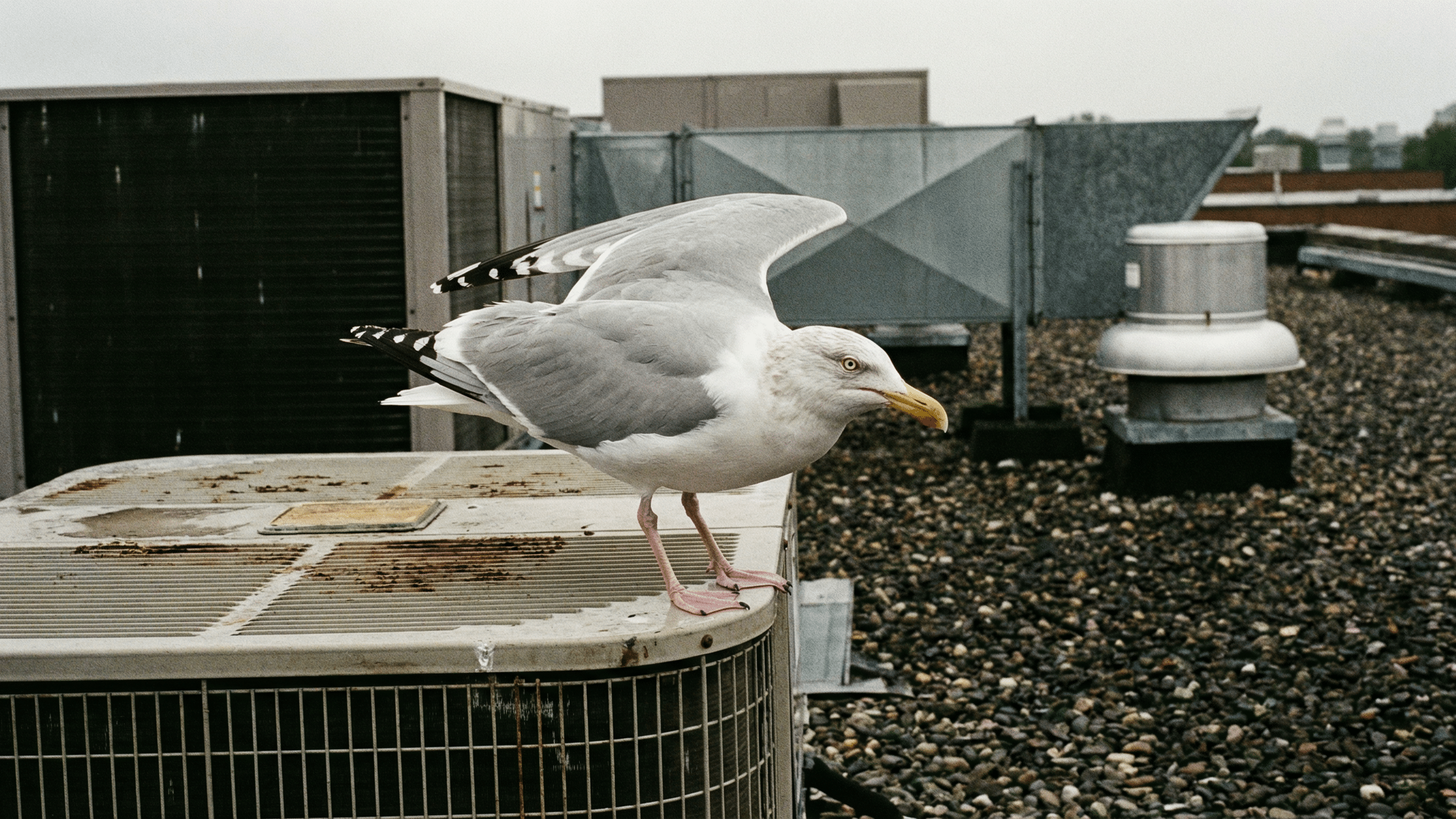
Many commercial buildings have large, relatively flat rooftops that provide suitable places for gulls to land, rest, and observe their surroundings. Unlike steep residential roofs, flat commercial roofs may contain wide open areas with limited human activity.
Warehouses, retail centres, office buildings, distribution facilities, and industrial properties often have rooftop features that attract birds.
These may include:
Flat roof sections.
Raised parapets.
HVAC equipment.
Rooftop walkways.
Mechanical enclosures.
Solar panel installations.
Areas with limited disturbance.
During busy holiday periods, building interiors and entrances may experience considerable activity, while rooftops remain comparatively undisturbed. This creates an interesting contrast: the ground level may be crowded with shoppers and employees, while the roof provides birds with a relatively quiet place to rest. If the same rooftop offers suitable landing and resting conditions throughout the year, gulls may continue using it regardless of seasonal changes.
Property owners dealing with repeated rooftop activity can also explore why seagulls keep landing on the same building sections even after repeated cleaning.
3. Seasonal Weather Can Influence Bird Movement
Weather is another factor that can influence where gulls spend time. During colder months, changing temperatures, wind, precipitation, and food availability may affect the movement and behaviour of different gull species. Depending on the region and species, some gulls migrate, some move locally, and others remain in the same general area throughout the year. Commercial buildings can provide sheltered or relatively protected resting locations during periods of unfavourable weather. For example, rooftop structures, sheltered loading areas, and building ledges may offer protection from strong winds or precipitation. However, it is important to recognise that not every increase in winter seagull activity is caused by migration or cold weather alone. Food availability, local habitat conditions, and established roosting behaviour can also play significant roles.
4. Parking Lots and Outdoor Spaces Offer Additional Feeding Opportunities
Commercial parking lots are not just places for vehicles. They can also become attractive feeding areas when food waste is present. Holiday shopping activity may result in more discarded packaging, food containers, and leftover meals.
Birds may search around:
Shopping cart collection areas.
Outdoor seating spaces.
Parking lot islands.
Loading zones.
Dumpster enclosures.
Restaurant pickup areas.
These locations can provide both food opportunities and open spaces where birds can easily identify approaching people or potential threats. When a commercial property has multiple food sources and resting areas close together, it may become particularly attractive to gulls.
5. Predictable Food Sources Encourage Repeat Visits
Seagulls are capable of learning where food can be found. If a property consistently provides accessible waste or food scraps, birds may begin treating it as a dependable feeding location. For example, if a restaurant's waste containers are routinely left uncovered after evening operations, gulls may learn to visit during those hours. Similarly, a shopping centre with outdoor food waste accumulation may attract birds repeatedly throughout the day. This explains why seagull problems can continue even after individual birds are temporarily chased away.
When the underlying attraction remains, birds have a reason to return.
Which Commercial Buildings Are Most Likely to Attract Seagulls?
Not every commercial property experiences the same level of bird activity. Certain building types are more likely to attract gulls because of their food availability, roof design, surrounding environment, or waste management practices.
No Water Here: Why Are Seagulls So Obsessed with Walmart?
Shopping Centres and Retail Complexes
High customer traffic, food courts, outdoor seating, parking areas, and waste collection points can create multiple attractions for gulls.
Gull Roof Nesting: What to Know & Do | Wild Goose Chase
Restaurants and Hotels
Food waste, outdoor dining areas, delivery activity, and accessible rooftops can encourage repeated bird visits.
Lesser black-backed gull (Larus fuscus)
Warehouses and Distribution Facilities
Large rooftops, loading areas, rooftop equipment, and relatively quiet sections can provide suitable resting locations.
Seagulls perched in a row along the edge of a modern building rooftop
Office Buildings and Business Parks
Wide roof surfaces, parapets, and mechanical structures can create convenient landing and resting locations.
Gang of Seagulls in Edinburgh Town Centre Swarming on Over-Full Rubbish Bins
Supermarkets and Grocery Stores
Food-related waste, outdoor collection points, and delivery areas can provide recurring feeding opportunities. The surrounding environment also matters. Properties near coastlines, rivers, lakes, landfills, and other established gull habitats may experience greater bird activity than buildings in locations with fewer nearby gull populations.
What Problems Can Seagull Gatherings Cause for Commercial Properties?
A few gulls resting on a rooftop may not seem like a major concern. However, repeated gatherings can create operational, maintenance, and sanitation challenges for commercial property owners. The impact often becomes more noticeable when birds repeatedly use the same locations for feeding, resting, or nesting.
1. Bird Droppings Can Create Cleaning and Maintenance Problems
One of the most visible consequences of large seagull gatherings is the accumulation of bird droppings.
Droppings can collect on:
Rooftops and roof access areas.
Building entrances.
Windows and exterior walls.
Parking structures.
Outdoor furniture.
Walkways and loading areas.
Rooftop HVAC equipment.
Over time, repeated accumulation can make commercial spaces look poorly maintained and increase cleaning requirements. Bird droppings can also contain microorganisms that may present health concerns when contaminated material becomes airborne or is handled without appropriate precautions. Commercial property managers should use suitable cleaning procedures and protective equipment rather than allowing waste to accumulate.
For more information, see how businesses can reduce seagull guano and dropping problems.
2. Seagulls Can Affect the Customer Experience
During the holiday season, businesses want their properties to look welcoming. Large groups of noisy birds gathering near entrances, outdoor seating areas, and pedestrian walkways can affect how customers experience a property.
Visitors may encounter:
Noise from calling birds.
Droppings on walkways and seating.
Birds approaching food.
Unpleasant conditions near waste collection areas.
Concerns about cleanliness.
For restaurants, hotels, shopping centres, and entertainment venues, maintaining a clean outdoor environment is particularly important. A property that repeatedly attracts large numbers of gulls may need a more structured bird management strategy. Businesses can also review how to keep seagulls away from building entrances and walkways to understand how these frequently used areas can be addressed.
3. Rooftop Equipment Can Become Difficult to Maintain
Commercial rooftops often contain important building infrastructure. HVAC systems, ventilation equipment, solar panels, drainage components, and maintenance access points may all be located on the roof. When gulls repeatedly gather in these areas, droppings, nesting materials, and other debris can complicate maintenance activities. For example, nesting material may accumulate around equipment or drainage areas, while droppings can make access surfaces unpleasant and require additional cleaning. Facility managers should inspect affected areas regularly and ensure that bird activity does not interfere with equipment maintenance or safe access.
4. Nesting Activity Can Create Additional Challenges
Some gull species use commercial rooftops as nesting locations, particularly when suitable flat areas and undisturbed spaces are available.
Nesting activity may result in:
Repeated bird presence.
Nesting material accumulation.
Increased noise.
Droppings around nesting areas.
Defensive behaviour during breeding periods.
Nesting birds require special consideration. Property managers should not assume that active nests can simply be removed. Depending on the species and location, wildlife protection laws may restrict disturbing birds, eggs, or active nests. Businesses should seek appropriate professional guidance before undertaking work in areas where nesting activity is present.
5. Repeated Bird Activity Can Increase Property Management Costs
When seagulls return to the same commercial property regularly, the problem may require ongoing attention.
Costs can include:
Additional exterior cleaning.
Rooftop inspections.
Waste management improvements.
Maintenance access arrangements.
Professional bird deterrent installation.
Repeated monitoring and maintenance.
Addressing the conditions attracting birds early can help businesses avoid relying entirely on repeated cleaning and temporary bird-scaring methods.
Why Do Seagulls Keep Returning After Being Chased Away?
One of the most frustrating experiences for property managers is seeing birds return shortly after they have been removed from an area. This happens because chasing birds away does not necessarily change the reasons they were attracted to the property.
The Food Source Is Still Available
If uncovered dumpsters, food scraps, and overflowing waste containers remain accessible, gulls may continue returning. Even if birds temporarily leave after being disturbed, the same feeding opportunities may attract them again.
The Rooftop Still Provides a Suitable Landing Area
A flat rooftop or wide parapet can remain attractive even after birds are temporarily frightened away. If the physical environment has not changed, the property may continue to provide convenient resting locations.
Birds Can Become Less Responsive to Repeated Disturbances
Some birds become accustomed to recurring disturbances that do not present a meaningful or lasting threat. For example, repeatedly using the same basic visual deterrent may produce diminishing results if birds learn that the object does not affect their ability to access the location. This is one reason a consistent, property-specific bird deterrent strategy is generally more useful than relying on occasional attempts to scare birds away.
The Surrounding Property May Continue Attracting Them
Sometimes, the source of the problem is not located directly on the building. A nearby restaurant, waste collection area, food court, or open feeding location may be attracting birds into the surrounding area. Property managers should consider the wider environment when investigating recurring seagull activity.
For a closer look at this behaviour, read why seagulls return to the same roofs and properties.
How Can Commercial Buildings Discourage Seagulls During the Holiday Season?
Managing seagull activity requires understanding what attracts the birds and identifying practical ways to make the property less appealing. An effective strategy often combines good waste management, regular inspections, and suitable physical bird deterrent systems.
1. Improve Commercial Waste Management
Reducing access to food is an important first step. Businesses should review how waste is stored, collected, and managed, particularly during periods of increased holiday activity.
Useful practices include:
Keeping dumpsters properly covered.
Cleaning food spills around waste containers.
Avoiding overflowing bins.
Scheduling waste collection according to seasonal demand.
Securing food waste in appropriate containers.
Maintaining outdoor dining and food service areas.
Restaurants and shopping centres should also monitor areas where customers frequently discard food. Reducing accessible food sources will not necessarily eliminate all gull activity, but it can help remove one of the main reasons birds repeatedly visit.
2. Inspect Rooftops and Identify Regular Landing Areas
Commercial property managers should inspect rooftops to identify where birds are gathering.
Look for:
Repeated droppings in specific locations.
Birds resting along parapets.
Nesting materials around equipment.
Regular activity near solar panels.
Areas where birds repeatedly land or take off.
Identifying these locations helps determine where deterrent measures may be most useful. A solution should address the actual areas being used rather than treating the entire building without considering bird behaviour. Property owners can also review how to keep seagulls off roof edges and parapets when planning protection for these common landing locations.
3. Consider Physical Bird Deterrent Systems
Physical deterrents can help prevent birds from using specific building surfaces as convenient landing or resting locations. For commercial rooftops, one option is a properly designed grid wire bird deterrent system.
Nation Wide Bird Control | Professional Commercial Bird Control
Grid wire systems use strategically positioned poles and tensioned wires to create a physical deterrent above selected surfaces. The system is designed to make landing and settling less convenient without relying on harmful methods.
Depending on the property and installation requirements, components may include:
Heavy-duty aluminium brackets.
Non-penetrating mounting brackets.
Welded pole holders.
Aluminium support poles.
Nylon-coated stainless steel wire.
Polyurethane-coated Kevlar cord.
Appropriate wire tensioning and fastening components.
The arrangement and spacing should be planned according to the building layout, roof characteristics, target bird species, and areas requiring protection. Grid wire systems can be particularly useful for commercial properties with large flat roofs, rooftop equipment, and solar panel installations. However, no single bird deterrent system is appropriate for every building. Site conditions and existing bird activity should be assessed before selecting a solution.
Businesses considering different options can read how to choose the right seagull deterrent system for a property.
4. Protect Rooftop Areas Without Unnecessary Roof Penetration
Commercial property owners often have concerns about installing bird deterrent equipment on existing roofing systems. Unnecessary roof penetrations can create additional waterproofing and maintenance considerations. For suitable applications, non-penetrating mounting options can help support bird deterrent installations without requiring conventional roof fasteners through the roofing surface. Heavy-duty aluminium brackets and welded pole holders can be used as part of appropriately designed systems. The correct mounting method depends on the roof material, structure, wind exposure, and installation requirements. Professional planning is important to ensure that the system is appropriately supported and does not interfere with drainage, equipment access, or roof maintenance.
5. Include Solar Panels and Rooftop Equipment in the Assessment
Solar installations can create additional spaces where birds may gather. Depending on their design and surrounding roof layout, panels may provide sheltered or relatively undisturbed areas that gulls can access. A bird deterrent plan should consider the entire rooftop environment rather than focusing only on the most visible gathering location.
Grid wire systems may be designed for suitable solar panel and commercial rooftop applications, provided the installation is compatible with the equipment and does not interfere with maintenance or manufacturer requirements.
Property managers can learn more about why seagull control is important for buildings with rooftop solar panels.
6. Use a Long-Term Strategy Instead of Temporary Scaring Methods
Temporary deterrents may sometimes help reduce bird activity, but they do not necessarily prevent birds from returning. For example, repeatedly disturbing birds without changing their access to suitable landing locations or food sources may produce limited long-term results.
A more practical approach is to combine:
Identification of bird gathering locations.
Reduction of accessible food waste.
Assessment of suitable landing and resting surfaces.
Selection of appropriate physical deterrents.
Professional installation.
Regular inspection and maintenance.
This creates a more organised approach to commercial bird control.
How Does a Grid Wire Seagull Deterrent System Work?
A grid wire system is a physical bird deterrent designed to discourage gulls from landing and settling on selected commercial surfaces. It typically consists of support poles and wires arranged in a planned pattern above the area requiring protection. The system works by changing the available landing space. Rather than providing an unobstructed surface where birds can easily land and rest, the wire arrangement creates a physical deterrent that makes settling less convenient.
What Materials Are Used in Commercial Grid Wire Systems?
Material selection is important because commercial bird deterrent systems must withstand outdoor conditions.
Common components include:
Aluminium poles: Lightweight support elements used to position the wires at the required height.
Aluminium brackets: Heavy-duty mounting components that support the system.
Stainless steel wire: Nylon-coated stainless steel wire can provide a durable wire option for suitable outdoor installations.
Kevlar cord: Polyurethane-coated Kevlar cord is another option for certain system configurations.
Crimps and connectors: Nickel-coated copper crimps can be used to secure and connect wire components as required by the system design. The appropriate materials and configuration depend on the property, environmental exposure, and installation requirements.
Why Is Correct Wire Tension Important?
Wire tension is an important part of grid wire system performance. If wires are too loose, they may sag and fail to maintain the intended arrangement. If they are excessively tight, unnecessary stress may be placed on the supporting components. Proper tension helps maintain the planned spacing and alignment of the deterrent system. Installation should account for the expected environmental conditions, support locations, and manufacturer's component recommendations.
Where Can Grid Wire Systems Be Installed?
Depending on the design, grid wire bird deterrents may be suitable for:
Flat commercial rooftops.
Solar panel installations.
Selected rooftop equipment areas.
Building ledges.
Other commercial surfaces where gulls regularly gather.
The system should be designed around the actual landing patterns and building conditions rather than installed using a one-size-fits-all layout.
When Should a Business Consider Professional Seagull Control?
Businesses should consider professional bird control when seagull activity becomes frequent, difficult to manage, or disruptive to normal property operations.
Some warning signs include:
Large groups regularly gathering on commercial rooftops.
Repeated droppings around entrances and walkways.
Birds returning after temporary deterrent attempts.
Nesting activity around rooftop equipment.
Increasing cleaning and maintenance requirements.
Seagulls gathering around solar panels or ventilation systems.
Customer complaints about bird activity.
Early assessment can help property managers understand the extent of the problem before it becomes more difficult to manage. A professional assessment should consider the building's design, roof material, bird activity patterns, surrounding food sources, and any applicable wildlife protection requirements. Property managers can learn more about how a professional seagull site assessment works before selecting a suitable approach.
How Seagull Control Systems Help Commercial Properties Manage Bird Activity
For businesses dealing with recurring seagull problems, choosing an appropriate deterrent system requires more than simply installing wires or placing equipment on a rooftop. The solution needs to match the building, the target bird species, and the areas where birds are gathering.
Seagull Control Systems specialises in humane seagull deterrent solutions for commercial, industrial, and residential properties across the United States and Canada. With more than 20 years of experience in bird deterrent solutions, the company focuses on helping property owners address recurring bird activity through practical physical deterrent systems. Its solutions include grid wire systems designed for suitable commercial rooftops, solar installations, and other areas where gulls repeatedly land or settle.
Solutions Designed for Different Commercial Properties
Different buildings have different bird control requirements. A warehouse may have extensive flat roof areas, while a shopping centre may need protection around multiple rooftop sections and mechanical installations.
Seagull Control Systems provides solutions that can be considered for:
Commercial buildings.
Industrial facilities.
Warehouses and distribution centres.
Shopping centres.
Restaurants and hospitality properties.
Commercial solar installations.
Residential properties.
Humane Physical Bird Deterrent Options
The company's grid wire approach uses physical deterrent components designed to discourage birds from settling on selected surfaces. Depending on the application, systems can incorporate non-penetrating heavy-duty aluminium brackets, welded pole holders, aluminium poles, and nylon-coated stainless steel wire or polyurethane-coated Kevlar cord. Typical aluminium support poles are approximately 6–8 feet long for suitable flat-roof and solar applications, although the appropriate configuration depends on the installation. The goal is to create a practical deterrent that addresses bird landing behaviour while considering the property's existing structure.
Businesses can explore the company's commercial seagull control solutions and bird deterrent products to learn more about available approaches.
For commercial property managers in the United States and Canada, additional information is available through the company's US commercial bird control and Canada commercial bird control pages.
Frequently Asked Questions About Seagulls Gathering Around Commercial Buildings
1. Why are seagulls suddenly gathering around my commercial building?
Seagulls may gather because of accessible food waste, suitable rooftop resting areas, nearby water sources, or seasonal changes in local bird activity. Increased holiday shopping and restaurant activity can make commercial properties more attractive.
2. Why do seagulls gather on flat commercial rooftops?
Flat rooftops provide open landing and resting areas with relatively little human disturbance. Parapets, rooftop equipment, and sheltered sections can also make commercial roofs attractive to gulls.
3. Do seagulls become more active around commercial buildings during winter?
Some properties experience increased winter bird activity because of changing food availability, local bird movements, and sheltered resting opportunities. However, seasonal patterns vary depending on the gull species and geographic location.
4. How can restaurants prevent seagulls from gathering around dumpsters?
Restaurants can reduce accessible food waste by keeping dumpsters covered, cleaning surrounding areas, securing food scraps, and maintaining appropriate waste collection schedules. Physical deterrents may also be useful around suitable building surfaces.
5. Can seagulls damage commercial rooftops?
Gulls can create maintenance concerns through droppings, nesting materials, and repeated activity around rooftop equipment and drainage areas. The extent of any damage depends on the building conditions and the nature of the bird activity.
6. What is the best bird deterrent for commercial rooftops?
The best solution depends on the roof design, bird species, and gathering locations. Grid wire systems can be suitable for certain flat rooftops, solar installations, and other commercial surfaces where gulls repeatedly land.
7. Are grid wire seagull deterrent systems humane?
Properly designed and installed grid wire systems are intended to discourage birds from landing rather than injure them. Installation should follow appropriate wildlife protection requirements and avoid trapping or harming birds.
For additional information, see whether seagull deterrent systems are safe and humane for wildlife.
8. Can seagull deterrent systems be installed without drilling into a commercial roof?
Yes, certain grid wire configurations can use non-penetrating mounting brackets. The suitability of this approach depends on the roof structure, mounting requirements, and environmental conditions.
9. Why do seagulls return even after being scared away?
Birds may return because the original attractions remain available. Food waste, convenient landing surfaces, and sheltered resting locations can continue encouraging repeated visits despite temporary disturbances.
10. When should commercial property owners install seagull deterrents?
Property owners should consider professional assessment when bird gatherings become recurring, cleaning requirements increase, or rooftop activity interferes with building maintenance. Early planning can help identify suitable deterrent options before the problem becomes more established.
Conclusion: Addressing Holiday Seagull Activity Starts With Understanding Why Birds Gather
Seagulls gathering around commercial buildings during the holiday season can create challenges for property managers, business owners, and facility maintenance teams. Increased food waste, busy shopping centres, restaurant activity, accessible dumpsters, and suitable rooftop resting areas can all contribute to greater bird activity. While temporary disturbances may move birds away for a short period, they do not necessarily address the conditions encouraging them to return. A more effective approach begins with understanding the property's specific bird activity patterns. Improving waste management, identifying common landing areas, inspecting rooftops, and considering appropriate physical deterrent systems can help businesses manage recurring seagull problems. For commercial properties with persistent rooftop activity, professionally designed grid wire systems may provide a practical option for discouraging gulls from settling on selected surfaces.
Is your commercial building attracting large groups of seagulls this holiday season?
Visit Seagull Control Systems to explore humane bird deterrent solutions for commercial properties across the United States and Canada.
You can also contact the team to discuss your property's bird control requirements and explore suitable options.
Taking a proactive approach can help keep commercial buildings cleaner, more manageable, and better prepared for the holiday season and beyond.