

A Practical Guide to Commercial Seagull Deterrents, Rooftop Protection, and Long-Term Bird Control
Introduction
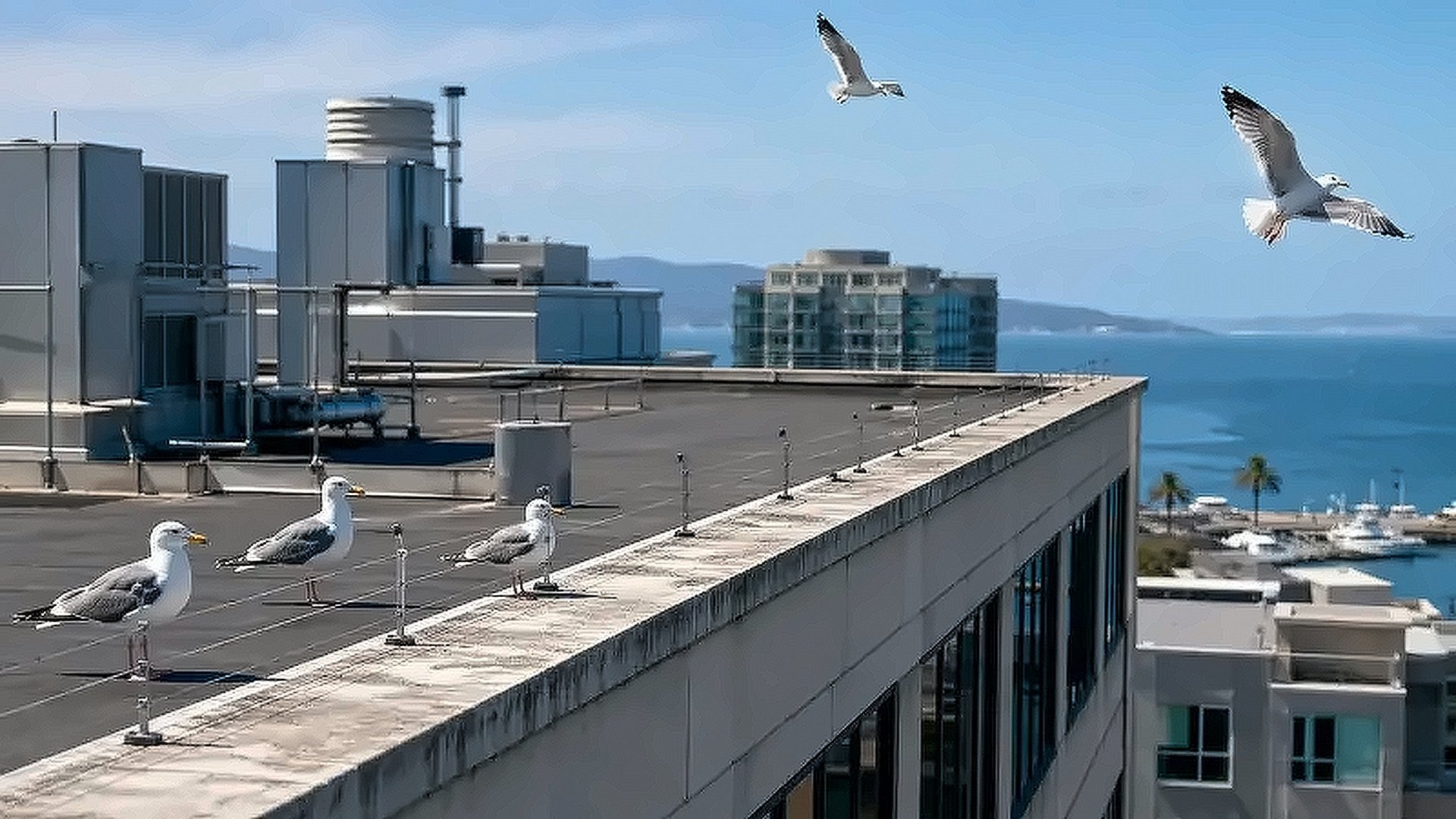
Seagulls sitting along roof edges and parapets might seem like a minor inconvenience at first. However, when birds repeatedly gather on the same sections of a commercial building, the problem can quickly become a maintenance and property management concern.
For warehouse operators, commercial property owners, facility managers, and industrial building managers, preventing seagulls from landing on roof edges is about more than keeping rooftops clean. Regular bird activity can lead to accumulated droppings, nesting materials, blocked drainage areas, and additional cleaning requirements.
So, how can property owners stop seagulls from landing on roof edges and parapets?
The most effective approach is to make these surfaces unsuitable for landing and perching through appropriately designed physical bird deterrent systems. Depending on the building's structure and the extent of the infestation, solutions may include seagull wire deterrents, stainless steel gull spikes, peaked roof wire systems, and customised rooftop protection.
However, choosing the right solution requires understanding why seagulls prefer these locations in the first place.
In this guide, we explore why seagulls gather along commercial roof edges, which deterrent methods are suitable for different surfaces, common bird control mistakes, and how property owners can develop a more effective long-term seagull prevention strategy.
Why Do Seagulls Keep Landing on Roof Edges and Parapets?
Before choosing a bird deterrent, it helps to understand why roof edges and parapets are attractive to seagulls.
These structures offer elevated positions, open surroundings, and convenient places to rest. For birds that prefer unobstructed spaces, commercial rooftops can provide several conditions that support regular landing and roosting activity.
1. Roof Edges Provide Convenient Perching Locations
Roof edges and parapets create elevated positions where seagulls can sit and observe their surroundings.
These locations allow birds to look for potential food sources, monitor nearby activity, and remain close to open spaces.
A wide parapet may provide enough surface area for several birds to land comfortably. Once seagulls begin using a particular section regularly, they may continue returning.
2. Flat Commercial Roofs Offer Open Landing Areas
Warehouses, shopping centres, factories, and industrial buildings often have extensive flat rooftops.
These open surfaces can become attractive roosting and feeding locations because they provide room for birds to land, move around, and take off without encountering many obstacles.
According to Seagull Control Systems, seagulls favour open spaces and can use flat rooftops, roof peaks, and protected areas near parapets for roosting and nesting.
3. Parapets Can Provide Suitable Nesting Locations
Parapets and nearby rooftop structures can create relatively protected areas where seagulls may establish nesting sites.
For example, the area behind a parapet or near rooftop HVAC equipment may offer shelter from certain weather conditions.
If birds repeatedly gather around these locations, property owners should check for signs of nesting rather than treating every visit as simple perching activity.
For additional information, read how to stop seagulls from nesting on commercial rooftops.
4. Nearby Food Sources Encourage Repeated Visits
Commercial buildings may be surrounded by restaurants, waste storage facilities, parking areas, food distribution centres, and other locations where birds can find food.
When seagulls have access to reliable food sources nearby, they may use commercial rooftops and parapets as resting points between feeding opportunities.
This means that even when a roof itself does not contain food, its surrounding environment can contribute to recurring bird activity.
What Problems Can Seagulls Cause on Roof Edges and Parapets?
Repeated seagull activity can create several problems for commercial properties.
The extent of the damage depends on the number of birds, the frequency of their visits, the building design, and how long the infestation has continued.
Accumulation of Bird Droppings
One of the most noticeable problems is the accumulation of seagull droppings along parapets, roof edges, and surrounding surfaces.
Bird droppings can affect the appearance of commercial buildings and increase cleaning requirements.
They may also create hygiene concerns around building entrances, walkways, outdoor equipment, and areas used by employees or visitors.
For more information, explore how businesses can reduce seagull guano and dropping problems.
Roof Drainage and Maintenance Concerns
Seagulls may bring nesting materials onto rooftops and repeatedly use areas near drainage outlets.
When debris accumulates around roof drains or other drainage components, it can contribute to blockages and water management problems.
Regular roof inspections become particularly important when nesting activity is present.
Deterioration of Roofing Materials
Repeated accumulation of bird droppings can contribute to roofing maintenance concerns.
Seagull Control Systems identifies acidic guano and roof membrane deterioration among the problems associated with persistent rooftop infestations.
For further information, read how seagulls can damage commercial roofs, HVAC equipment, and building surfaces.
For commercial buildings with extensive flat roofs, addressing recurring bird activity can therefore form part of a wider preventative maintenance strategy.
Increased Cleaning and Maintenance Costs
When seagulls repeatedly use the same roof edges and parapets, property maintenance teams may need to clean affected surfaces more frequently.
This can add to routine maintenance responsibilities, particularly across large industrial and commercial facilities.
Nesting Activity and Aggressive Behaviour
Seagulls may become more territorial around established nesting locations.
During nesting periods, birds can become defensive when people approach their nests.
This creates additional considerations for maintenance workers, roofing contractors, and anyone responsible for inspecting rooftop equipment.
Property owners should avoid disturbing active nests without first checking applicable wildlife protection requirements.
How Can Property Owners Stop Seagulls From Landing on Roof Edges?
The most practical way to prevent seagulls from landing on roof edges is to install a physical deterrent that makes the surface unsuitable for perching.
Different roof structures require different solutions. A narrow parapet, a sloping roof ridge, and a large flat rooftop do not offer the same installation conditions.
Seagull Control Systems provides several bird deterrent options designed around these differences.
1. Install Seagull Wire Deterrents Along Parapets
Seagull wire deterrents are designed to discourage birds from landing on narrow surfaces such as parapets, ledges, beams, railings, pipes, and similar structures.
The system uses tensioned wires supported by posts installed along the protected surface.
Because seagulls cannot comfortably grasp a thin wire as they would a broad ledge, the arrangement makes the surface less suitable for landing.
Seagull Control Systems describes its customised wire deterrents as a solution for narrow rooftop areas where seagulls regularly perch or roost.
When is this solution suitable?
Commercial roof parapets.
Narrow rooftop ledges.
Structural beams and railings.
Pipes and ducts.
Building edges where birds repeatedly perch.
The main advantage is that the system can be adapted to different structural configurations rather than relying on a single standard layout.
2. Use Stainless Steel Gull Spikes on Suitable Surfaces
Stainless steel gull spikes are another physical deterrent option for narrow surfaces.
They are designed to prevent seagulls from finding a comfortable place to land or perch.
However, property owners should understand an important distinction: ordinary bird spikes are not necessarily suitable for seagulls.
Seagulls have relatively long legs, which means they may still be able to land between shorter spikes if the arrangement is inappropriate.
Seagull Control Systems specifically uses extra-tall stainless steel gull spikes designed to address this problem. Its website identifies parapets, ledges, walls, girders, and ducts as suitable application areas.
When should property owners consider gull spikes?
They may be appropriate when:
The protected surface is relatively narrow.
Birds regularly use the same ledge.
A physical barrier is preferred.
The surface can accommodate the spike mounting arrangement.
The installation should be selected according to the surface dimensions and the type of bird activity involved.
3. Install Wire Systems on Roof Peaks and Sloping Edges
Seagulls do not only land on flat parapets. They may also use roof ridges and elevated peaks as resting locations.
Peaked roof wire systems are designed to discourage this behaviour.
Seagull Control Systems describes a system using aluminium brackets attached along roof ridges, supporting parallel rows of wire above the roof surface.
The wires create an unsuitable landing arrangement because seagulls cannot comfortably grasp them.
The company also describes variations of this installation for parapets, walls, pipes, ledges, and other structural areas.
This approach is worth considering for commercial buildings where seagulls repeatedly land along roof peaks rather than on broad flat surfaces.
4. Consider Grid Wire Systems for Large Rooftop Areas
Sometimes the problem extends beyond the roof edges.
Seagulls may use the entire rooftop for landing, resting, feeding, or nesting. In such cases, installing deterrents only along the parapets may leave large areas unprotected.
A grid wire deterrent system can be considered for these wider spaces.
The SCS Grid Wire Deterrent System uses a network of wires or synthetic cords supported by aluminium poles and brackets above the protected surface.
According to Seagull Control Systems, the wires create perceived obstacles to landing and take-off, discouraging seagulls from using the protected area.
The system is designed for large flat commercial roofs, warehouses, industrial facilities, docks, solar arrays, and other open surfaces.
Why consider grid wire protection?
It addresses larger open rooftop areas.
Its configuration can be customised to the building.
The supporting brackets are designed not to penetrate suitable roof surfaces.
It can be adapted around rooftop structures and equipment.
It can be installed by a facility's maintenance team or a qualified contractor with the company's support.
Grid wire protection is particularly relevant when seagulls are using both roof edges and the wider rooftop as part of the same recurring infestation.
5. Protect Nearby HVAC Units and Rooftop Equipment
Roof edges are not always the only places attracting seagulls.
HVAC units, condensers, rooftop equipment, and other elevated structures can provide additional perching and nesting opportunities.
If birds are moving between parapets and mechanical equipment, protecting only the building perimeter may not address the entire problem.
Seagull Control Systems offers specialised deterrent spiders, also known as Daddi Long Legs, for smaller flat surfaces such as HVAC units, chimneys, boat cabin roofs, and similar structures.
These devices use stainless steel wires extending outward from a central base to discourage birds from landing nearby.
Including rooftop equipment in the initial assessment can help property owners develop a more complete bird control plan.
For further information, read how seagull deterrents protect rooftop equipment and building systems.
How to Choose the Right Seagull Deterrent for Your Roof
Selecting a bird deterrent should not be based on appearance alone.
The right system depends on the surface being protected, the number of birds, their landing behaviour, and the surrounding building layout.
Here is a practical comparison of the main options offered by Seagull Control Systems.
Roof area or structureSuitable deterrent approachNarrow parapetsSeagull wire deterrents or extra-tall gull spikesBuilding ledgesWire deterrents or gull spikesSloping roof ridgesPeaked roof wire systemsLarge flat rooftopsGrid wire deterrent systemsHVAC units and smaller flat structuresDeterrent spidersLarge rooftops with multiple landing locationsCustomised combination of deterrents
These are starting points rather than universal installation rules. A site assessment helps determine the appropriate configuration.
What Should Property Owners Check Before Installation?
Before installing a commercial seagull deterrent, consider the following factors.
Roof material and condition: Check whether the existing roof can accommodate the proposed mounting arrangement without compromising its surface.
Parapet dimensions: The width, height, and shape of the parapet can influence which deterrent system is appropriate.
Existing rooftop equipment: Identify HVAC units, solar panels, drainage outlets, access routes, and other structures that may affect installation.
Bird activity patterns: Determine whether seagulls are perching, roosting, or nesting. Each behaviour may require a different approach.
Maintenance access: Ensure that the selected deterrent does not unnecessarily obstruct routine roof inspections, equipment servicing, or building maintenance.
Weather exposure: Commercial rooftop installations must account for wind, rain, temperature changes, and other environmental conditions.
Considering these details before installation can help prevent unsuitable product selection and unnecessary modifications later.
For more guidance, explore how to choose the right seagull deterrent system for your property.
What Mistakes Should Property Owners Avoid When Trying to Keep Seagulls Off Roof Edges?
A common reason bird control efforts fail is that the solution does not address the actual reason birds are returning.
Here are some mistakes worth avoiding.
1. Using Ordinary Bird Spikes Without Considering Seagull Behaviour
Not all bird spikes are designed for seagulls.
Short or inexpensive spikes may not prevent larger gulls from landing between the individual points.
Seagull Control Systems specifically distinguishes its extra-tall stainless steel gull spikes from ordinary bird spikes, highlighting the importance of selecting products designed for the target species.
2. Installing Deterrents Only Where Droppings Are Visible
Visible droppings indicate where birds have been spending time, but they do not always reveal where the birds initially land.
For example, seagulls may roost on an unprotected roof ridge before moving to a parapet.
Installing a deterrent only on the visibly affected section may leave the main landing location accessible.
Property owners should inspect the entire affected rooftop.
3. Relying Only on Fake Predators or Noise Devices
Fake owls, predator models, and sound devices are commonly considered when businesses first encounter bird problems.
However, seagulls can become accustomed to repeated visual and sound-based disturbances.
Seagull Control Systems identifies habituation as a limitation of several temporary deterrent methods. Its approach focuses on physical deterrents and other methods selected for their specific applications.
4. Ignoring Nearby Nesting Locations
If birds have established nesting areas near the parapet, simply preventing perching may not address the wider problem.
Property owners should inspect nearby roof sections, sheltered corners, HVAC installations, and other potential nesting areas.
Active nests should not be disturbed without checking applicable wildlife regulations and obtaining any necessary permissions.
5. Forgetting Routine System Maintenance
Even a properly installed physical deterrent requires inspection.
For example, grid wire systems need periodic checks to ensure that wires remain correctly tensioned.
Seagull Control Systems recommends inspecting and tightening wires that may loosen over time. Its FAQ describes a maintenance routine approximately every three months, with the actual requirements depending on the installation.
Maintenance is important not only for effectiveness but also for preventing sagging wires that could create entanglement risks.
Step-by-Step: How to Create a Long-Term Seagull Prevention Plan
For commercial property owners, managing seagull activity is easier when bird control is treated as part of regular building maintenance.
The following process provides a practical starting point.
Step 1: Conduct a rooftop inspection
Inspect parapets, roof edges, ridges, ledges, HVAC units, and other elevated structures. Record where seagulls are landing and where droppings or nesting materials are accumulating.
Step 2: Identify the main bird activity areas
Determine whether the issue involves occasional perching, regular roosting, or established nesting activity.
Step 3: Select suitable deterrent systems
Consider wire deterrents or gull spikes for narrow surfaces, peaked roof wires for roof ridges, and grid wire systems for larger open rooftops.
Step 4: Plan the installation
Review roof materials, mounting requirements, equipment access, and drainage arrangements. Seagull Control Systems can provide customised designs and installation guidance for different commercial properties.
Step 5: Clean affected surfaces safely
Remove accumulated bird droppings and debris before installation, following appropriate hygiene and protective equipment procedures.
Step 6: Schedule regular inspections
Check wires, brackets, mounting points, and other system components periodically. Address loose or damaged components promptly.
This approach helps businesses move beyond temporary bird removal and towards a more structured property protection strategy.
Why Humane Physical Bird Deterrents Are Important
Preventing seagulls from landing on commercial buildings should not require harming them.
Physical exclusion and deterrent systems can make specific surfaces unsuitable for landing without relying on trapping or injuring birds.
For example, Seagull Control Systems explains that its properly installed and tensioned wire systems are designed to discourage landing without entangling or harming gulls.
Its approach focuses on changing the conditions that make a location attractive to seagulls rather than simply attempting to scare them away temporarily.
This is an important consideration for commercial property owners who want to protect their buildings while taking a responsible approach to wildlife management.
Businesses should also check local and regional wildlife regulations before undertaking bird control work, particularly where active nests or protected species are involved.
You can learn more about whether seagull deterrent systems are safe and humane for wildlife.
Why Commercial Property Owners Choose Seagull Control Systems
Managing seagull infestations across commercial rooftops requires an understanding of bird behaviour, building structures, and suitable deterrent technologies.
Seagull Control Systems specialises in seagull deterrent solutions for commercial, industrial, and municipal properties across the United States and Canada.
Its product and solution range addresses different bird activity areas, including:
Large flat commercial rooftops.
Roof edges and parapets.
Building ledges and structural beams.
Industrial facilities and warehouses.
HVAC units and rooftop equipment.
Solar panel installations.
Docks, piers, and marinas.
The company also works with property owners, roofing contractors, facility maintenance teams, architects, and other professionals to develop customised deterrent installations.
For larger projects, its grid wire systems can be designed around the specific dimensions and requirements of the property. Installation support is available through its network of contractors or in collaboration with the customer's own maintenance team.
You can explore the company's commercial and industrial solutions in the United States and commercial solutions in Canada to understand how different properties can be protected against recurring seagull activity.
Frequently Asked Questions About Keeping Seagulls Off Roof Edges and Parapets
1. How do I stop seagulls from landing on my roof edges?
Install a suitable physical deterrent, such as seagull wire systems or extra-tall stainless steel gull spikes. The appropriate solution depends on the width, design, and material of the roof edge.
2. What is the best seagull deterrent for commercial parapets?
Seagull wire deterrents and extra-tall stainless steel gull spikes are two options offered by Seagull Control Systems. The choice depends on the parapet dimensions, building structure, and existing bird activity.
3. Do bird spikes work for seagulls?
Some bird spikes may be unsuitable because seagulls have relatively long legs and can land between shorter spikes. Extra-tall gull spikes specifically designed for seagulls are a more appropriate option for certain surfaces.
4. How can I stop seagulls from nesting behind roof parapets?
Identify the nesting locations and assess suitable physical deterrents for the surrounding roof structures. Active nests may be legally protected, so consult applicable wildlife regulations before undertaking any work.
5. Are wire bird deterrents suitable for commercial buildings?
Yes. Wire deterrents can be used on suitable parapets, ledges, roof ridges, beams, and other structural surfaces. Larger open rooftops may require a customised grid wire arrangement.
6. Can seagull deterrents damage commercial roofing materials?
The risk depends on the product and installation method. Seagull Control Systems offers grid wire systems with non-penetrating weighted mounting arrangements designed for suitable roof surfaces. Always assess roof compatibility before installation.
7. How often should commercial bird deterrent systems be inspected?
Inspection frequency depends on the system and environmental conditions. For its grid wire system, Seagull Control Systems recommends checking and tightening wires approximately every three months.
8. Can seagulls become accustomed to bird deterrent systems?
Seagulls can become accustomed to some temporary visual and sound deterrents. Physical deterrents work differently by making protected surfaces unsuitable for landing rather than relying solely on repeated disturbances.
9. Can bird deterrents be installed on existing commercial rooftops?
Yes. Seagull Control Systems offers systems designed for existing commercial roofs and can customise installations around building structures, rooftop equipment, and other site-specific requirements.
10. Who provides commercial seagull deterrent systems in the USA and Canada?
Seagull Control Systems provides customised seagull deterrent solutions across the United States and Canada, with installation support through qualified contractors and customer maintenance teams.
For additional information, visit the Seagull Control Systems FAQs.
Conclusion: Protect Roof Edges Before Seagull Activity Becomes a Bigger Problem
Seagulls landing on roof edges and parapets can create more than an occasional cleaning inconvenience. Repeated perching, roosting, and nesting activity can contribute to sanitation concerns, roofing maintenance issues, and additional responsibilities for commercial property management teams.
The most effective way to address the problem is to understand where birds are landing and choose deterrents that suit those specific surfaces.
Wire deterrents can help protect narrow parapets and ledges, extra-tall stainless steel gull spikes can discourage perching on suitable surfaces, and grid wire systems can address larger open rooftops.
For property owners dealing with recurring seagull infestations, a customised approach is often more practical than relying on temporary solutions that birds may eventually ignore.
Need help keeping seagulls off your commercial roof?
Seagull Control Systems specialises in engineered seagull deterrent solutions for commercial rooftops, parapets, industrial buildings, warehouses, and other large properties.
Visit Seagull Control Systems to explore its products and commercial solutions, or contact the team to discuss your property's bird control requirements and request a customised consultation.