

Introduction
Seagull droppings can turn a manageable bird problem into an ongoing property maintenance issue. A few birds landing on a roof may not seem serious, but repeated roosting, nesting, and feeding can leave large areas covered in guano. Over time, droppings can affect roofs, walkways, equipment, vehicles, outdoor seating, solar panels, docks, and other frequently used spaces.
For businesses, the problem is not simply about keeping surfaces clean. Persistent seagull activity can create unpleasant odors, increase cleaning demands, interfere with customers and employees, and contribute to the deterioration of surfaces and equipment. Properties that provide food, shelter, warmth, elevated perches, or access to water can be particularly attractive to gulls.
The most effective approach is usually to address why seagulls are using the property, not just clean up the evidence they leave behind. A professional seagull control program can combine site assessment, exclusion, deterrent devices, habitat management, and ongoing monitoring to reduce repeated landing, roosting, and nesting.
This guide explains practical ways businesses can reduce seagull guano and dropping problems while protecting buildings, equipment, solar arrays, and outdoor areas through humane bird management.
Why Seagull Guano Becomes a Business Problem
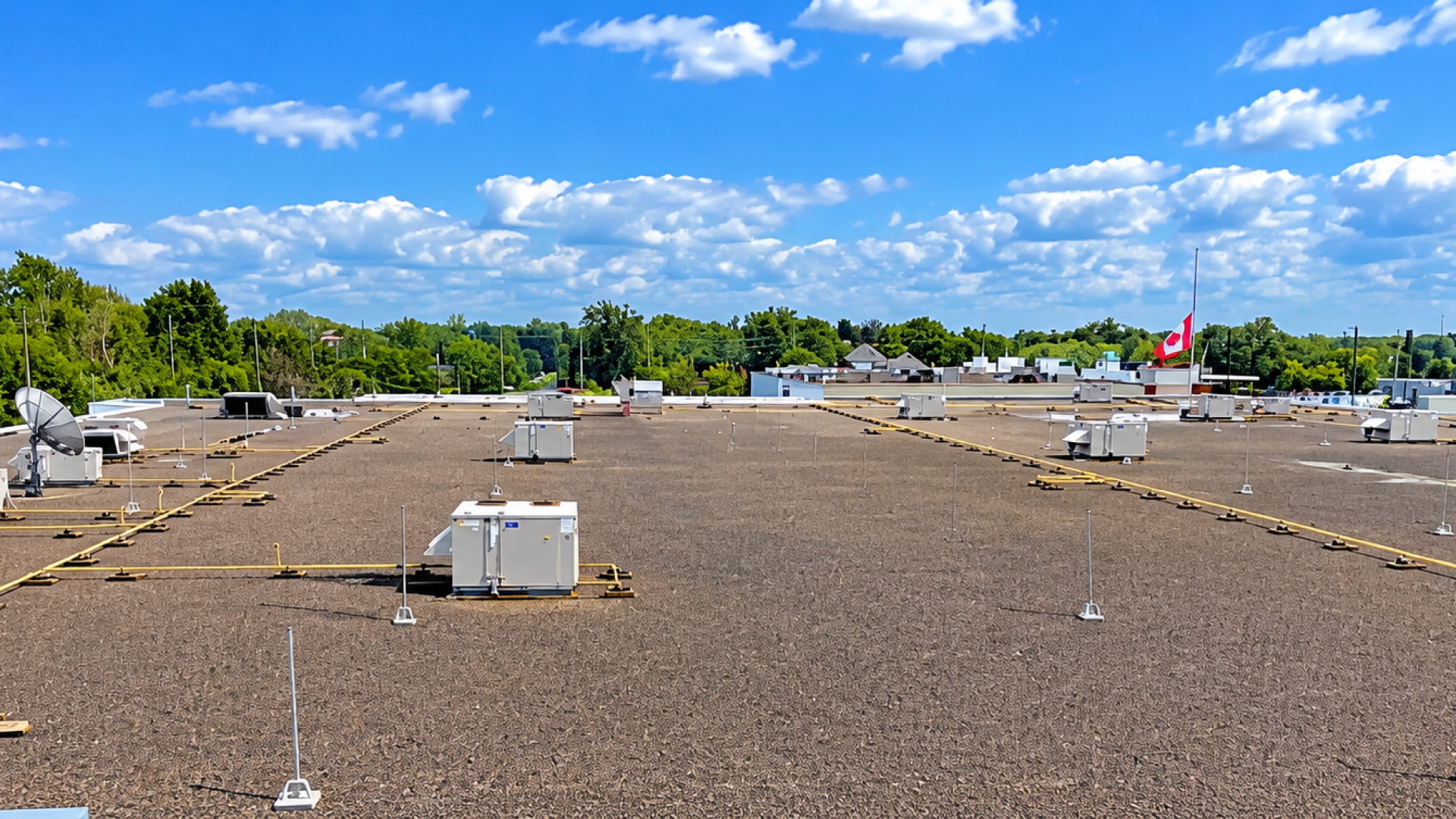
Seagull droppings accumulate quickly when birds repeatedly use the same property. Flat commercial roofs, parapets, HVAC equipment, rooftop structures, loading areas, docks, and other elevated surfaces can become regular roosting locations.
The problem becomes more difficult when birds establish a routine. If a roof consistently provides a safe place to rest and the surrounding property offers accessible food or water, gulls may continue returning even after individual cleanup efforts.
Property appearance and cleanliness
Heavy bird droppings can make a commercial property look neglected even when the rest of the building is well maintained. This can be particularly noticeable around entrances, sidewalks, parking areas, outdoor dining spaces, and customer-facing facilities.
Regular pressure washing or cleaning may improve the appearance temporarily, but cleaning alone does not stop birds from returning.
Damage to building surfaces and equipment
Guano can accumulate around roof drains, HVAC equipment, rooftop structures, vents, solar panels, and other components. Combined with nesting material and general debris, repeated bird activity can create additional maintenance concerns.
Droppings may also make walkways, stairs, decks, loading areas, and other surfaces slippery or difficult to maintain.
Disruption to customers and employees
A business with active gulls around entrances or outdoor seating can become uncomfortable for customers and staff. Birds may become particularly persistent around restaurants, food-service properties, waste facilities, shopping centers, marinas, and locations where food is regularly available.
Reducing the bird activity at its source can help businesses maintain a cleaner and more usable environment.
What Attracts Seagulls to Commercial Properties?
Understanding why gulls choose a property is one of the first steps toward controlling the problem.
Seagulls are adaptable birds that can take advantage of many urban and coastal environments. A commercial property may unintentionally provide several things they need.
Accessible food
Open trash containers, food waste, overflowing dumpsters, discarded food, outdoor dining areas, and poorly secured waste can attract gulls.
Businesses should review how food waste is stored and whether birds can easily access it.
Practical measures may include:
Keeping waste containers properly closed
Cleaning food debris from outdoor areas
Managing spills promptly
Securing food waste before disposal
Reviewing dumpster placement and access
Avoiding unnecessary food sources around buildings
Food management does not replace physical bird deterrence, but it can make a property less attractive.
Safe roosting areas
Flat roofs, parapets, signs, rooftop equipment, solar arrays, docks, piers, and other elevated surfaces can provide excellent resting locations.
Once birds identify a property as a safe place to land, repeated use can become difficult to stop without changing the conditions that cause seagulls to roost.
Nesting opportunities
Seagulls may attempt to nest on commercial rooftops and other elevated structures where they feel relatively protected from disturbance.
A nesting problem is different from occasional bird activity. Once nesting behavior begins, property owners should use appropriate professional guidance rather than attempting to remove birds, nests, or eggs themselves.
Water and surrounding habitat
Properties near coastlines, lakes, rivers, marinas, ports, and other water environments may naturally experience more gull activity. Businesses cannot eliminate the surrounding habitat, so the practical goal is usually to make the property itself less attractive for landing, roosting, and nesting.
How Can Businesses Reduce Seagull Droppings?
A successful seagull control strategy usually involves several measures rather than one device or one cleaning service.
The basic process is:
Identify where birds land, roost, feed, and nest.
Determine what attracts them to the property.
Remove or reduce avoidable attractants.
Install appropriate humane deterrents.
Protect vulnerable areas.
Monitor bird activity and adjust the strategy when necessary.
Clean affected surfaces safely and regularly.
This approach addresses the source of the problem instead of repeatedly treating the symptoms.
Start With a Professional Seagull Site Assessment
Before choosing a deterrent system, a property should be evaluated carefully.
A professional assessment can identify bird activity patterns that are easy to miss during a casual inspection. For example, a business may notice droppings near an entrance while the primary roosting location is actually several levels above it.
What should a site assessment examine?
A thorough assessment may consider:
Roof design and access points
Parapets and ledges
HVAC equipment
Solar panels
Rooftop structures
Signs and architectural features
Docks and piers
Waste and dumpster areas
Outdoor dining spaces
Nesting locations
Bird flight and landing patterns
Existing deterrent equipment
Areas with concentrated guano
The goal is to understand how birds are using the property before recommending a control strategy.
Use Physical Seagull Deterrents Where Birds Land
Physical deterrents can make specific surfaces less comfortable or accessible for roosting.
Depending on the property, professional bird control systems may include carefully installed barriers, exclusion measures, tensioned systems, netting, or other appropriate deterrent technologies.
The correct system depends heavily on the structure.
Roofs and parapets
Commercial rooftops often contain numerous potential landing areas. A deterrent strategy may focus on parapets, ledges, equipment zones, and other locations where birds repeatedly settle.
Installation needs to account for roof materials, drainage, maintenance access, equipment placement, and the property's appearance.
Solar panels
Solar arrays can create sheltered surfaces that birds may use for landing or nesting. Droppings can also accumulate on and around panels, creating a recurring maintenance problem.
Bird deterrence around solar installations should be designed carefully so that the system protects the array without interfering with its function or future maintenance.
Docks and piers
Marinas, waterfront properties, docks, and piers can experience persistent bird activity because they naturally provide elevated surfaces near water.
A customized deterrent system can target the specific surfaces gulls use most often while preserving access for people, boats, and maintenance personnel.
Combine Deterrence With Property Management
Bird control is stronger when physical deterrents are supported by good property management.
A business should review its waste handling, food storage, outdoor cleaning, and building maintenance practices alongside its bird control program.
Reduce accessible food
Even a well-designed deterrent system can face pressure if birds have an easy food source nearby.
Review dumpsters, trash containers, outdoor dining areas, loading zones, and food disposal practices for opportunities to reduce access.
Keep problem areas clean
Cleaning accumulated guano is still necessary. However, cleaning should be viewed as part of an overall management program rather than the entire solution.
A clean surface can quickly become contaminated again if birds continue using the same location.
Address nesting conditions early
Early intervention can be easier than waiting until birds have established a significant nesting area.
Property managers should regularly inspect rooftops, equipment areas, ledges, solar arrays, and other locations where birds have previously shown interest.
Why Cleaning Alone Does Not Solve a Seagull Problem
Pressure washing, disinfecting, and routine cleanup can remove visible droppings, but they do not necessarily change bird behavior.
Imagine a warehouse roof that receives frequent gull activity. The maintenance team cleans the roof every few weeks, but the birds continue landing in the same locations. The building may look better immediately after cleaning, but the underlying attraction remains.
This is why professional bird control focuses on deterrence and prevention as well as sanitation.
Cleaning removes the buildup. Deterrence addresses the repeated behavior.
Both can have a place in a comprehensive property management plan.
Humane Seagull Control: What Does It Mean?
Humane bird control aims to discourage birds from using specific areas without intentionally injuring them.
For commercial and residential properties, this can involve exclusion, physical deterrents, habitat management, and other professionally selected methods.
The objective is not necessarily to eliminate birds from the surrounding environment. Instead, the objective is to make the building, roof, solar array, dock, waste area, or other protected space less suitable for roosting and nesting.
Why humane methods matter
Seagulls are wildlife, and regulations governing birds, nests, eggs, and other wildlife can vary by location.
Property owners should avoid improvised methods that could injure birds or interfere with protected wildlife. Professional bird control providers can help determine what measures are appropriate for the property and situation.
Common Mistakes Businesses Make With Seagull Problems
Some approaches appear reasonable but may provide only temporary relief.
Relying entirely on scare devices
Visual or noise-based deterrents may have a role in certain situations, but birds can become accustomed to repeated stimuli.
A strategy that relies on one type of deterrent may not perform consistently across every property.
Installing generic products without a site assessment
A device that works well in one location may be poorly suited to another.
Roof design, bird behavior, weather exposure, building use, and nesting pressure all influence the appropriate approach.
Waiting until nesting becomes severe
Ignoring early signs can allow bird activity to become more established.
Repeated droppings, nesting material, feathers, and concentrated bird activity are reasons to inspect the property and consider preventive measures.
Treating only the visible area
Birds may be using several locations across a property. Addressing one contaminated walkway while ignoring the rooftop or nearby waste area may leave the main attraction untouched.
How a Customized Seagull Deterrent Plan Works
A customized program typically starts with understanding the property rather than choosing a product first.
Assess the property: The provider identifies bird activity, nesting areas, landing zones, food sources, access points, and vulnerable surfaces.
Identify the main pressure points: Not every part of a property needs the same level of protection. The assessment helps determine where deterrence will provide the greatest benefit.
Select suitable deterrent methods: The system may combine different approaches depending on the building and bird behavior. For example, a commercial facility with rooftop equipment may require a different strategy from a waterfront restaurant with outdoor dining and a dock.
Install the system correctly: Proper installation matters because gaps, weak attachment points, poor positioning, or blocked maintenance access can reduce the effectiveness of a deterrent system.
Monitor and maintain: Bird pressure can change as seasons, property conditions, food availability, and surrounding activity change. Ongoing inspection helps identify areas that may need adjustment or additional protection.
How Businesses Can Build a Long-Term Seagull Management Strategy
The best bird control programs are treated as part of property maintenance rather than as a one-time reaction.
Businesses can establish a simple inspection routine covering:
Rooftops
Solar panels
HVAC areas
Parapets and ledges
Loading areas
Waste facilities
Outdoor dining spaces
Docks and piers
Previously affected nesting areas
Staff should also document recurring problem locations. Patterns can reveal where birds are returning and whether existing deterrents need attention.
A long-term strategy is especially useful for large commercial properties where several structures or bird-attracting conditions exist.
What Are the Benefits of Professional Seagull Control?
A professionally planned bird deterrent system can help businesses address several problems at once.
Potential benefits include:
Less accumulated guano
Reduced nesting activity
Fewer birds roosting on protected surfaces
Cleaner customer-facing areas
Better protection for equipment and structures
Reduced dependence on repeated reactive cleanup
Better protection of solar installations
Improved usability of outdoor areas
A more consistent property maintenance strategy
Results depend on the property, bird pressure, selected system, installation, and ongoing management. No responsible bird control provider should promise that every bird will permanently disappear from an entire surrounding area.
The practical objective is to reduce unwanted bird activity in the specific areas that need protection.
How to Choose a Professional Seagull Control Provider
Businesses should look beyond the price of a single device or installation.
Ask potential providers:
Do you perform a property assessment before recommending equipment?
What type of bird activity are you addressing?
How will the system affect roof or equipment maintenance?
Are the recommended methods humane?
How will existing nests or nesting activity be handled?
What maintenance does the system require?
Can the solution be customized for solar panels, rooftops, docks, or other structures?
How will the system be monitored after installation?
Experience with commercial environments can be particularly valuable because large properties often have multiple bird pressure points.
Conclusion
Seagull guano problems rarely disappear through cleaning alone. If birds continue to find food, shelter, nesting opportunities, and comfortable places to roost, the cycle can repeat.
Businesses can reduce unwanted seagull activity by combining property management with a professionally designed deterrent strategy. The process begins with identifying where and why birds are using the property, followed by appropriate exclusion or deterrent measures for rooftops, solar panels, docks, piers, warehouses, waste facilities, outdoor dining areas, and other vulnerable locations.
Humane bird control is about changing the conditions that encourage birds to remain in specific areas—not harming wildlife. With proper assessment, installation, monitoring, and maintenance, businesses can take a more proactive approach to reducing guano buildup, nesting, and recurring cleanup demands.
For properties dealing with persistent seagull activity, the most useful first step is usually a site assessment. Understanding how deterrent systems work alongside physical property conditions makes it possible to develop a deterrent plan suited to the property rather than relying on a generic product or temporary cleanup.
Frequently Asked Questions
What is the most effective way to keep seagulls off commercial roofs?
The most effective approach is usually a customized combination of physical deterrents, exclusion, attractant management, and monitoring. Learn more about the best way to keep seagulls off commercial roofs with a site assessment that identifies the specific roof areas gulls use for landing, roosting, or nesting so the system can target those locations.
How do professional seagull deterrent systems prevent nesting and roosting?
Professional systems make targeted areas less suitable for landing, resting, or nesting. Discover how deterrent systems prevent nesting by utilizing physical exclusion, barriers, tensioned systems, netting, or other deterrent methods selected according to the structure and bird activity.
Are seagull deterrent systems safe, humane, and legal in the USA and Canada?
Humane deterrence is designed to discourage birds from using protected areas without intentionally harming them. Read about whether systems are safe and humane for wildlife. Regulations can vary by jurisdiction, particularly around active nests and eggs, so property owners should use appropriate professional guidance and comply with applicable laws.
How can seagulls damage commercial roofs, HVAC equipment, and building surfaces?
Repeated bird activity can leave substantial guano and nesting debris around roofs, drains, HVAC equipment, ledges, and other structures. See details on how seagulls damage commercial roofs and property surfaces to understand how accumulated waste can increase maintenance demands and contribute to surface deterioration.
How can property owners protect solar panels from seagull damage and droppings?
A customized bird deterrent system can protect the areas around solar arrays where gulls land, roost, or nest. Check out this guide on how to protect solar panels from droppings without interfering with panel performance, access for maintenance, or the overall system design.
What are the best seagull control solutions for docks, piers, marinas, and boats?
The appropriate solution depends on the structure and how birds are using it. Learn more about the best deterrent solutions for docks to target preferred landing and roosting areas while maintaining access for people, vessels, and routine maintenance.
How long do professional seagull deterrent systems typically last?
Service life varies according to the type of system, installation quality, materials, weather exposure, and property conditions. Regular inspection and maintenance can help identify wear, damage, or areas where bird pressure has changed over time.
Can professional seagull control prevent birds from returning to the same property?
Professional deterrence can reduce birds returning to protected areas by making those locations less attractive for landing, roosting, and nesting. However, no responsible program can guarantee that birds will never return anywhere on a property or in the surrounding environment.
How much does professional seagull control cost for a commercial or residential property?
Cost depends on factors such as property size, bird pressure, roof or structure design, number of affected areas, selected deterrent methods, installation requirements, and maintenance needs. A site assessment provides a more useful basis for determining the appropriate scope and cost.
How does a professional seagull site assessment and customized deterrent plan work?
The provider examines bird activity, nesting and roosting locations, food sources, access points, vulnerable structures, and existing deterrents. The findings are then used to create a property-specific plan focused on reducing unwanted bird activity in the areas that require protection.
