

Introduction
Seagulls can create persistent problems for property owners when they begin nesting, roosting, or gathering in large numbers around buildings and outdoor spaces. Their droppings can stain surfaces, affect rooftop equipment, contaminate outdoor dining areas, and increase cleaning demands. Nesting activity may also interfere with maintenance, while birds gathering around solar panels, docks, warehouses, and waste facilities can make routine operations more difficult.
Choosing the right seagull control system requires more than finding a product that keeps birds away temporarily. The most suitable approach depends on the property layout, the number of birds, their behavior, the areas they use, and whether they have already established nesting sites. A solution that works well along a narrow rooftop ledge may be unsuitable for an expansive solar installation or a waterfront warehouse.
Professional seagull control focuses on identifying why birds are attracted to a location and applying appropriate measures to discourage repeated activity without harming wildlife. This often involves combining physical barriers, access prevention, targeted deterrents, and ongoing maintenance.
Understanding these factors helps property owners make informed decisions, avoid ineffective installations, and develop a long-term plan for protecting buildings, equipment, and outdoor spaces.
Understand Why Seagulls Are Attracted to Your Property
Before selecting a deterrent, identify what attracts seagulls to the site. Birds generally return to locations that provide convenient resting places, suitable nesting surfaces, access to food, or shelter from disturbance.
Identify Nesting and Roosting Areas
Nesting and roosting are different behaviors, and that distinction affects the type of control required.
Nesting occurs when birds establish a site for laying eggs and raising young. Flat rooftops, parapet walls, sheltered corners, and spaces beneath rooftop equipment may provide suitable nesting conditions.
Roosting refers to resting or gathering, often on elevated surfaces such as roof edges, lighting structures, signs, solar panels, and dock railings. These areas may accumulate droppings even when birds are not nesting.
Walk the property, where safe, and document where birds gather throughout the day. Look for nesting material, repeated landing patterns, droppings, and areas where birds enter or leave the building's surroundings.
Look for Food and Water Sources
Food availability can make a property more attractive than nearby alternatives. Open waste containers, uncovered dumpsters, food scraps, poorly maintained waste areas, and outdoor dining spaces can encourage repeated visits.
Water sources and sheltered spaces may also contribute to bird activity.
Correcting these conditions is an essential part of effective seagull management. Even a well-designed physical deterrent may produce disappointing results if an accessible food source continues attracting birds to the same location.
Assess Existing Damage and Operational Problems
Determine how bird activity affects the property. A commercial building may experience recurring roof cleaning, while a restaurant may struggle to maintain clean seating areas. A solar installation may require additional cleaning because droppings cover portions of the panels.
Document the affected areas, cleaning frequency, maintenance interruptions, and any equipment concerns. These observations help establish priorities and provide a practical baseline for evaluating the deterrent system later.
Evaluate Your Property Before Choosing a Deterrent
The physical characteristics of a property strongly influence which seagull control methods are appropriate.
Consider the Size and Layout of the Site
A small residential roof has different requirements from a distribution warehouse or a waterfront industrial facility.
Examine the property's roofline, ledges, parapets, equipment, drainage systems, solar arrays, and access points. Identify narrow locations where birds repeatedly perch and larger open areas where they gather.
For extensive properties, divide the site into zones. A rooftop may require ledge protection around the perimeter, targeted deterrents near HVAC equipment, and separate measures around solar panels.
This approach helps avoid treating every surface identically when bird activity differs across the property.
Account for Weather and Environmental Exposure
Properties across the USA and Canada experience different combinations of wind, rain, snow, freezing temperatures, and intense sunlight.
Waterfront buildings may face salt exposure and strong winds. Northern properties may need systems that accommodate snow accumulation and freeze-thaw conditions. Rooftop installations in sunny climates must withstand prolonged UV exposure.
Ask whether the proposed equipment is suitable for the property's environmental conditions. Materials, attachment methods, drainage, and maintenance access all affect long-term performance.
Check Safety and Maintenance Requirements
A deterrent should not create new problems for building occupants, maintenance teams, or wildlife.
For rooftop installations, consider fall protection, safe access routes, fire safety, drainage, and clearance around HVAC equipment. At solar installations, make sure the system does not obstruct panel access or interfere with electrical components.
Property managers should also determine how the equipment will be inspected and cleaned. A system that is difficult to maintain may become less effective if debris accumulates or components loosen over time.
Compare the Main Types of Seagull Deterrent Systems
There is no single deterrent suitable for every property. Each method addresses different bird behaviors and site conditions.
Bird Spikes for Ledges and Narrow Perching Surfaces
Bird spikes are physical deterrents installed along selected surfaces where birds repeatedly land. Properly designed systems make those locations less suitable for perching without being intended to injure birds.
They are commonly considered for parapets, narrow ledges, signs, roof edges, and certain building features.
Best Suited For
Defined perching locations where installation can be completed safely and the surface can support the system.
Advantages
They provide a fixed physical barrier and do not depend on electricity or regular activation.
Limitations
Spikes may be unsuitable for broad, flat rooftops or established nesting areas. Their performance depends on correct coverage, installation, and continued inspection.
A professional assessment should determine whether spikes are appropriate for the target species and location, including any nesting-related restrictions.
Bird Netting for Enclosed or Protected Areas
Bird netting creates a physical barrier that prevents birds from entering selected spaces. It can be useful beneath structures, around covered equipment, or across certain architectural openings.
Best Suited For
Areas where access can be restricted by a properly fitted barrier.
Advantages
Correctly installed netting can protect a defined space from repeated entry.
Limitations
Poor installation may leave gaps or create hazards for birds. Loose, damaged, or improperly maintained netting can also become entanglement risks.
Netting must be securely fitted, inspected regularly, and designed for the site's environmental conditions. It should not block ventilation, drainage, emergency access, or required maintenance routes.
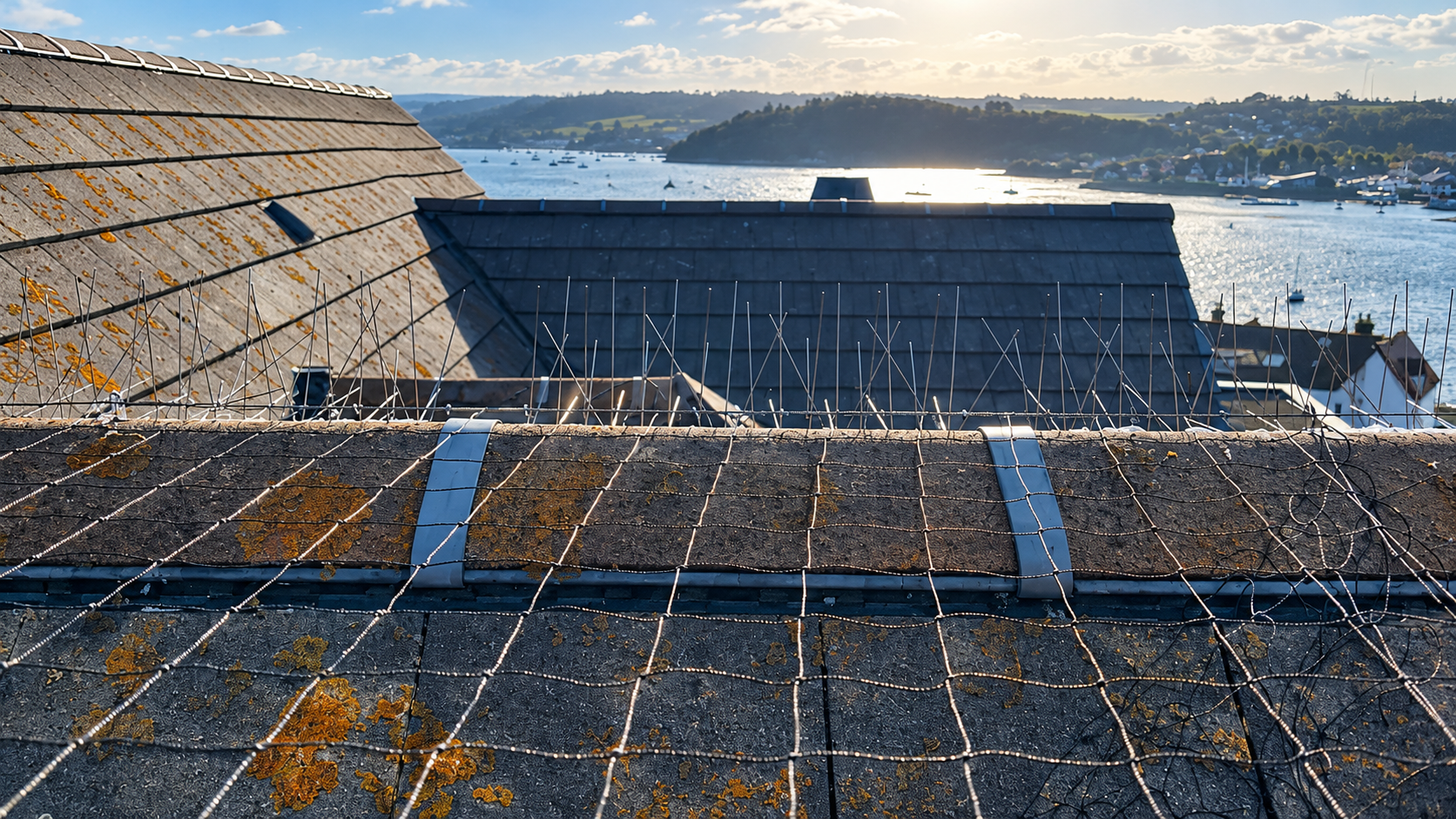
Bird Wire Systems for Roof Edges and Architectural Features
Bird wire systems use tensioned wires supported by small posts to make selected surfaces less comfortable for landing.
They may be appropriate for roof ledges, parapets, and architectural features where maintaining a relatively discreet appearance matters.
Best Suited For
Narrow or defined surfaces with suitable attachment points.
Advantages
Properly installed systems can preserve much of a building's original appearance while discouraging perching.
Limitations
Wires require suitable tension, secure supports, and periodic inspection. They may not address birds nesting in adjacent open areas.
Solar Panel Bird Protection
Solar arrays can provide sheltered spaces beneath panels where birds may gather or nest. Droppings can accumulate on panel surfaces and nearby roofing, while nesting material may complicate maintenance.
Solar panel bird protection commonly involves purpose-designed mesh or perimeter barriers that restrict access beneath the array.
Best Suited For
Solar installations with recurring bird activity beneath panels.
Advantages
Properly fitted barriers can reduce access to protected spaces and help limit nesting beneath the array.
Limitations
Installation must account for panel frames, wiring, drainage, roof surfaces, and manufacturer requirements. Poorly fitted barriers may damage components or leave entry gaps.
Bird exclusion should be planned before nesting becomes established whenever possible.
Visual and Audio Deterrents
Reflective devices, moving visual objects, and certain sound-based products attempt to discourage birds through unfamiliar or disruptive stimuli.
Their effectiveness depends on the setting, bird behavior, and how consistently the devices are used.
Best Suited For
Selected situations where site conditions support their use, often as part of a broader management plan.
Advantages
Some devices can be deployed without extensive physical alterations to a building.
Limitations
Birds may become accustomed to predictable stimuli. Sound-based systems may also disturb neighbors, workers, or other wildlife.
These methods should not automatically be treated as permanent solutions, particularly where gulls have established nesting or roosting patterns.
Integrated Seagull Deterrent Systems
An integrated system combines compatible measures to address different bird behaviors and locations.
For example, a warehouse may require physical barriers along roof edges, protected access points around rooftop equipment, and improved waste management. A marina may need selected perch deterrents alongside better control of food waste.
Integrated plans are especially useful when birds use several parts of a property rather than one isolated surface.
The objective is to match each measure to a specific problem instead of installing unnecessary equipment across the entire site.
Match the Deterrent to Your Property Type
The most practical system depends on how the property is used and where bird activity creates the greatest disruption.
Commercial Rooftops and Warehouses
Large commercial roofs often contain parapets, ventilation equipment, drainage features, and sheltered corners. Birds may use these features for resting or nesting.
Begin by mapping the most active areas. Use appropriate commercial roof physical exclusion or perch deterrents where they fit the structure, and keep waste storage areas clean and secured.
For warehouses, loading zones and nearby waste facilities deserve attention because food availability can attract birds even when the roof itself is protected.
Solar Farms and Commercial Solar Panels
Solar installations require careful planning because deterrents must work alongside electrical equipment and panel maintenance requirements.
Inspect the array perimeter, spaces beneath panels, cable routes, and locations where solar panel nesting material accumulates. Choose barriers designed for the particular panel configuration and environmental exposure.
Avoid improvised attachments that could damage panels, wiring, or roofing. Installation should preserve access for inspection, cleaning, and repairs.
Docks, Piers, Marinas, and Waterfront Properties
Gulls naturally use many waterfront environments, so completely eliminating their presence may be unrealistic. The practical objective is to reduce persistent perching, nesting, and contamination in specific operational areas.
Potential measures include suitable perch deterrents on selected railings and structures, access prevention around equipment, and better waste management near docks and piers.
Salt, moisture, wind, and changing water conditions should influence material selection and inspection schedules. Any installation must also avoid creating hazards for people, vessels, and wildlife.
Restaurants and Outdoor Dining Areas
Bird activity around restaurants can affect cleanliness, guest comfort, and food-handling practices.
Focus first on accessible food waste, uncovered bins, outdoor food storage, and unattended food. Then assess nearby ledges, awnings, signs, and other surfaces used by gulls.
Physical deterrents may be appropriate for selected architectural features, while waste management and staff procedures help reduce the attraction.
Any approach must preserve customer safety, sanitation, accessibility, and the appearance of the dining area.
Residential Buildings and Shared Properties
Homes, apartment buildings, and condominium complexes may experience repeated noise, droppings, and nesting around roofs or balconies.
Start by identifying whether the birds are using one ledge, an entire roofline, or multiple structures. Targeted deterrents may be more practical than treating every surface.
Residents and property managers should coordinate work involving shared roofs, exterior walls, or common areas. Established nests require particular care because wildlife protections may restrict removal or disturbance.
Choose Humane and Legally Appropriate Bird Control
A responsible seagull deterrent system should discourage unwanted activity without deliberately injuring birds or creating avoidable wildlife hazards.
Understand Wildlife Protection Requirements
Seagulls and other gull species may be protected under federal, state, provincial, or territorial laws. Requirements vary according to species, location, nesting status, and the proposed activity.
In the United States, certain native migratory birds are protected under the Migratory Bird Treaty Act. In Canada, relevant protections may include the Migratory Birds Convention Act and applicable provincial or territorial rules.
Do not assume that every gull species has identical legal status or that an established nest can be removed simply because it is on private property.
Before disturbing nests, eggs, or young birds, confirm the applicable requirements with the relevant wildlife authority or a qualified professional. Permits or other authorizations may be necessary for some activities.
Avoid Methods That Can Injure Wildlife
Improperly installed netting, exposed sharp components, unsecured wires, and unsuitable chemical products can create unnecessary risks.
Choose products designed for bird exclusion and ensure they are installed according to manufacturer instructions and applicable regulations. Avoid adhesives, poisons, or improvised devices that could trap or injure birds.
Humane control is not simply about selecting a product marketed as bird-friendly. Installation quality, site conditions, inspections, and responsible maintenance all matter.
Understand the Importance of Professional Site Assessments
A site assessment helps determine why gulls are present, which areas require attention, and what combination of measures is appropriate.
What a Thorough Assessment Should Include
A professional assessment typically examines:
Bird activity: Where gulls land, gather, nest, and access the property.
Property conditions: Roof design, ledges, solar equipment, waste areas, and nearby food sources.
Existing problems: Droppings, nesting material, cleaning requirements, and maintenance disruptions.
Environmental exposure: Wind, rain, snow, salt, and sunlight.
Safety and legal considerations: Access restrictions, worker protection, wildlife rules, and any nesting-related limitations.
Recommended measures: Suitable deterrents, installation locations, maintenance needs, and monitoring procedures.
The result should be a site-specific plan rather than a generic recommendation based solely on the property's size.
Ask the Right Questions Before Hiring an Installer
Before approving a proposal, ask whether the provider has experience with similar properties and the relevant deterrent technology.
Find out which areas will be treated, how the system will be attached, what maintenance is required, and how performance will be evaluated. Request clarification about product limitations, warranty terms, and any conditions that could affect the result.
A useful proposal explains why the selected system fits the site. Be cautious of claims that promise permanent results without considering bird behavior, changing conditions, or the need for ongoing maintenance.
Consider Installation Costs and Long-Term Value
The cost of professional seagull control depends on the property's size, the number of affected areas, the system selected, installation difficulty, and the condition of existing nesting sites.
A small project involving a few accessible ledges may require less work than a large commercial roof or solar installation with multiple access challenges.
Key Cost Factors
Materials and specialized mounting equipment.
Labor, roof access, and safety requirements.
The number of locations requiring protection.
Repairs or preparation needed before installation.
Wildlife assessments or required authorizations.
Future inspections, cleaning, and replacement of damaged components.
The lowest initial quote may not provide the best long-term value if it leaves important access points untreated or uses unsuitable materials.
Compare proposals based on coverage, installation quality, expected maintenance, safety, and the provider's approach to evaluating results. Ask for an itemized estimate so you can understand what is included and identify any exclusions.
Maintain and Monitor Your Seagull Deterrent System
Even a well-selected deterrent requires periodic inspection. Wind, weather, building maintenance, and changes in bird behavior can affect performance over time.
Establish a Practical Inspection Schedule
Inspect the system at intervals appropriate to the equipment, site exposure, and manufacturer's recommendations. Additional checks may be needed after severe weather or nearby construction.
Look for loose supports, damaged netting, gaps, accumulated debris, corrosion, and signs that birds are using untreated areas.
Inspections on roofs and elevated structures should be performed by appropriately trained personnel using suitable safety procedures.
Measure Whether the System Is Working
Evaluate the system using observations rather than assumptions.
Track the frequency of bird activity in previously affected areas, the appearance of new nesting attempts, the amount of droppings accumulating, and changes in cleaning requirements.
If gulls begin gathering nearby or move to untreated sections, reassess the property rather than immediately adding more of the same equipment. The original plan may need adjustment to address an overlooked landing area or continuing food source.
Respond to Changes in Bird Behavior
Bird activity can change with seasons, food availability, neighboring construction, and access to new shelter.
A system that performs well in one area may require modifications if birds shift to another roof section or structure. Regular monitoring helps identify these changes before they become larger maintenance problems.
Common Mistakes to Avoid When Choosing Seagull Control
Several avoidable mistakes can reduce the effectiveness of an otherwise suitable deterrent system.
Selecting a Product Before Identifying the Problem
Buying spikes, netting, or sound devices without understanding where birds gather can lead to poor coverage. Assess the property first and choose equipment according to the behavior and surface involved.
Treating Only the Most Visible Area
Protecting one roof edge may not help if gulls can still access a nearby parapet, equipment platform, or sheltered corner. Consider how birds move across the entire property.
Ignoring Food Waste and Other Attractants
Physical deterrents work best when the site does not continue offering easy food. Secure waste, maintain outdoor dining areas, and remove avoidable food sources as part of the management plan.
Neglecting Maintenance
Loose barriers, damaged netting, and untreated access points can reduce protection. Include inspection and maintenance responsibilities in the original plan.
Disturbing Active Nests Without Checking the Rules
Removing nests or attempting to relocate birds without understanding applicable wildlife protections can create legal and animal-welfare problems. Seek appropriate guidance before taking action.
Conclusion
Choosing the right seagull deterrent system begins with understanding the property, the birds' behavior, and the specific problems that need to be addressed. Bird spikes, netting, wire systems, solar panel barriers, and other deterrents each serve different purposes, so the best choice depends on site conditions rather than product popularity.
Property owners should evaluate building design, environmental exposure, maintenance access, food sources, and wildlife regulations before approving an installation. For larger or more complicated sites, a professional assessment can help identify the right combination of humane measures and prevent unnecessary spending on unsuitable equipment.
Seagull control is best treated as an ongoing property management process. Appropriate installation, responsible waste management, routine inspections, and adjustments based on observed results can help reduce recurring bird activity while protecting buildings, equipment, and wildlife.
Seagull Control Systems® provides customized, humane seagull deterrent solutions for commercial and residential properties across the USA and Canada. With more than 20 years of specialized experience, the company helps property owners evaluate their needs and select suitable protection for rooftops, solar panels, docks, piers, warehouses, waste facilities, and outdoor spaces.
Frequently Asked Questions
1. What is the most effective way to keep seagulls off commercial roofs?
The most effective approach depends on where gulls land or nest. Professionally installed bird spikes, wire systems, or other suitable physical deterrents can protect specific areas, while waste management and regular inspections help reduce recurring activity.
2. How do professional seagull deterrent systems prevent nesting and roosting?
Professional systems make selected surfaces less suitable for landing or restrict access to nesting spaces. A site assessment identifies bird activity and suitable barriers, while maintenance and monitoring help address gaps or changes in bird behavior.
3. Are seagull deterrent systems safe, humane, and legal in the USA and Canada?
They can be humane when appropriately selected and installed without creating injury or entanglement risks. Legal requirements vary by species and location, so property owners should check applicable wildlife protections before disturbing active nests, eggs, or young birds.
4. How can seagulls damage commercial roofs, HVAC equipment, and building surfaces?
Accumulated droppings can stain surfaces and increase cleaning demands. Nesting material may obstruct drainage or interfere with maintenance, while bird activity around rooftop equipment can complicate inspections and access. Actual risks depend on site conditions and the amount of activity.
5. How can property owners protect solar panels from seagull damage and droppings?
Purpose-designed solar panel mesh or perimeter barriers can help prevent birds from accessing spaces beneath panels. Installation should preserve drainage, wiring clearance, panel integrity, and maintenance access. Regular inspections help identify damaged barriers and new nesting attempts.
6. What are the best seagull control solutions for docks, piers, marinas, and boats?
Suitable options may include bird wire or other perch deterrents on selected structures, access barriers around equipment, and improved waste management. Materials should withstand moisture, wind, and salt exposure without creating hazards for people, vessels, or wildlife.
7. How long do professional seagull deterrent systems typically last?
Lifespan varies by product, installation quality, weather exposure, materials, and maintenance. Ask the installer about expected service life, inspection requirements, replacement components, and warranty coverage rather than relying on a universal lifespan estimate.
8. Can professional seagull control prevent birds from returning to the same property?
Deterrents can reduce access to selected areas, but no system should be assumed to prevent every return. Results depend on coverage, food availability, bird behavior, neighboring attractants, and ongoing maintenance. Monitoring helps identify areas that need adjustment.
9. How much does professional seagull control cost for a commercial or residential property?
Costs depend on the size of the affected area, deterrent type, installation access, labor, materials, and maintenance needs. A site assessment and itemized estimate provide a more reliable price than a general per-property figure.
10. How does a professional seagull site assessment and customized deterrent plan work?
An assessment identifies bird activity, nesting and landing locations, property conditions, safety requirements, and potential attractants. The provider then recommends suitable deterrents, explains installation and maintenance needs, and establishes a practical approach for monitoring results over time.
