

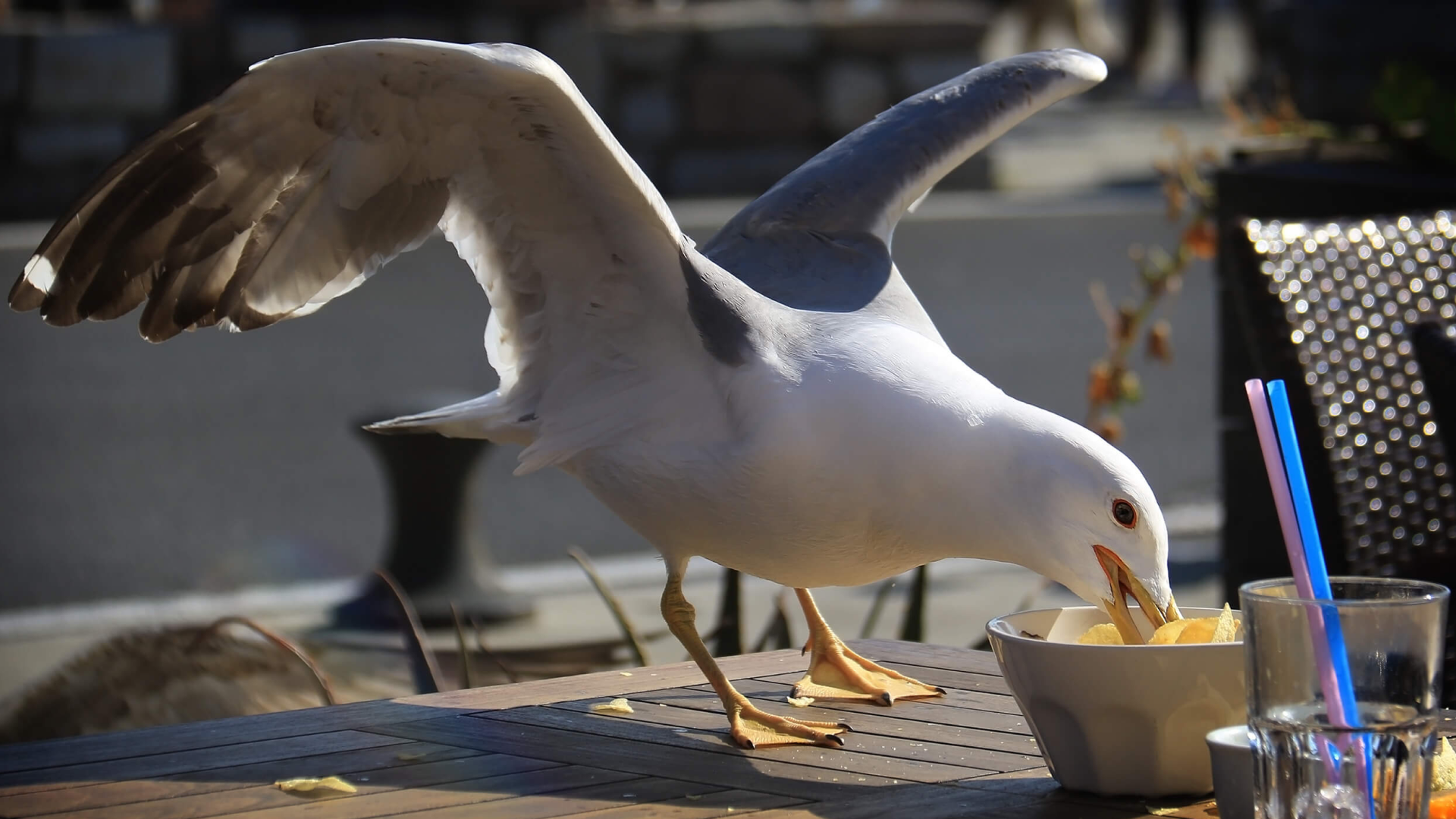
Outdoor dining creates an inviting atmosphere for restaurants, hotels, waterfront cafés, resorts, and residential patios. Guests enjoy fresh air, scenic views, and the relaxed experience of eating outside. However, when seagulls begin landing on tables, stealing food, gathering around waste bins, or leaving droppings on chairs and walkways, that pleasant setting can quickly become a problem.
Seagulls are opportunistic birds. They recognize reliable food sources, learn from their surroundings, and often return to locations where they have found easy meals. An outdoor dining area with uncovered food, overflowing trash containers, or convenient perching spots can become especially attractive.
Keeping seagulls away requires more than chasing them off whenever they arrive. The most effective approach combines food and waste management, changes to the environment, responsible guest practices, and, where necessary, professionally installed humane seagull control systems.
Property owners should also consider the type of birds involved, the layout of the dining area, nearby nesting locations, and applicable wildlife protection laws. A solution that works for a small backyard patio may not be sufficient for a busy waterfront restaurant with extensive seating and nearby waste facilities.
This guide explains how to discourage seagulls from outdoor dining areas, prevent recurring problems, protect guest comfort, and choose practical deterrents without harming wildlife.
Why Seagulls Gather Around Outdoor Dining Areas
Understanding what attracts seagulls is the first step toward managing them. These birds are adaptable and can quickly associate human activity with opportunities to find food.
Food Waste Creates a Reliable Feeding Opportunity
Food is often the main attraction. Unattended plates, dropped french fries, open takeaway containers, and uncovered buffet trays can encourage gulls to approach dining tables.
Waste management also matters. A bin with a loose lid or a dumpster containing exposed food scraps can provide a dependable feeding location even when restaurant staff keep the dining tables clean.
Once gulls repeatedly find food in an area, they may continue visiting because previous experiences have rewarded the behavior.
Tables, Railings, and Roof Edges Provide Convenient Perches
Seagulls need places to land, rest, observe their surroundings, and search for food. Patio railings, umbrellas, light fixtures, rooftop edges, and nearby ledges can provide convenient resting points.
Waterfront properties may face additional pressure because docks, piers, boats, and open shoreline structures offer nearby perching opportunities. If you manage marina-adjacent or coastal seating, exploring solutions designed for docks and piers can be particularly helpful.
The objective is not to eliminate every place a bird could land. Instead, property managers should identify the specific structures that allow gulls to congregate immediately beside diners or repeatedly access food.
Human Activity Can Reinforce the Problem
Some visitors unintentionally encourage gulls by feeding them. Others leave food unattended while taking photographs, talking, or stepping away from their tables.
Even occasional feeding can make a dining area more attractive. Clear signage, staff awareness, and consistent cleanup procedures help prevent these habits from becoming established.
How to Keep Seagulls Away From Outdoor Dining Areas
A successful bird management plan addresses the reasons gulls visit while making the dining space less convenient for them. Start with practical measures that staff can implement immediately, then consider physical deterrents if the problem continues.
1. Remove Easy Access to Food
The first step is to reduce the food rewards available to gulls. Deterrents become less effective if birds can continue finding meals around the same tables.
Establish a routine for clearing used plates, wiping surfaces, and removing food scraps promptly. Staff should also check beneath tables, around planters, along walkways, and near outdoor service stations.
Useful practices include:
Clear plates and uncovered food as soon as practical.
Clean spills and dropped food throughout service.
Keep condiments, bread baskets, and takeaway items covered when unattended.
Avoid leaving food trays outside during service interruptions.
Train staff not to feed gulls, even when the birds appear harmless.
Restaurants should also review how food reaches outdoor tables. Covered service carts and enclosed storage containers can reduce opportunities for gulls to access food before it reaches guests.
2. Secure Trash Bins and Waste Collection Areas
Poorly managed waste can undermine otherwise effective seagull control efforts. Gulls may ignore a clean dining table if a nearby bin offers an easier meal.
Choose waste containers with secure, properly fitted lids. Empty them before they overflow, and inspect the surrounding ground for discarded packaging, napkins, and food scraps.
For larger properties, review the placement of dumpsters and food-waste collection points. If these facilities sit directly beside outdoor seating, consider whether they can be relocated or screened without compromising sanitation, ventilation, or collection access.
Waste storage areas should be inspected after busy meal periods and at closing time. Restaurants near beaches, marinas, and other gull habitats may need more frequent checks during periods of heavy activity.
3. Establish a Consistent No-Feeding Policy
Post polite, visible signs asking guests not to feed wildlife. Explain the reason in straightforward language: feeding attracts birds to dining tables and can create hygiene and guest-comfort problems.
Train employees to respond consistently when someone feeds gulls. A friendly reminder is usually more appropriate than an argument, particularly in hospitality settings.
The policy should apply across the entire property, including patios, poolside seating, picnic areas, and waterfront terraces. If feeding is permitted in one nearby area, gulls may continue moving between that location and the restaurant.
4. Reduce Attractive Perching Opportunities
Inspect the dining area for frequently used landing and resting locations. Common examples include broad railings, exposed beams, roof edges, signage, and the tops of nearby structures.
Where practical, redesign or modify these features so they are less convenient for birds to occupy. Suitable options depend on the structure, its use, and the species involved.
For example, a restaurant may be able to modify a seldom-used ledge above its patio while preserving the open views that make the space appealing to customers.
Any modifications must remain safe for guests, employees, and maintenance workers. Avoid improvised installations that create sharp edges, obstruct exits, interfere with accessibility, or damage the building.
5. Protect Food Preparation and Service Stations
Outdoor kitchens, beverage stations, buffet counters, and self-service areas require special attention because exposed food can attract gulls even when dining tables are clean.
Use appropriate covers, food-safe storage, and physical separation between food preparation and areas where birds can land. Inspect overhead structures for bird activity, particularly if a service station sits beneath a roof overhang or open canopy.
If gulls repeatedly approach a particular counter, observe when they arrive and what attracts them. A targeted adjustment to the station's layout may be more useful than installing deterrents across the entire patio.
Humane Seagull Deterrents for Restaurants and Patios
Cleaning and waste control are essential, but they may not solve every problem. Gulls can continue landing on a property because of nearby nesting sites, established resting areas, or convenient access to surrounding rooftops and structures.
Humane bird deterrents help make specific areas less attractive without relying on injury or indiscriminate wildlife removal.
6. Install Bird Spikes on Suitable Perching Surfaces
Bird spikes are physical deterrents designed to discourage birds from landing on selected ledges, narrow surfaces, and other structures. When properly selected and installed, they can reduce opportunities for gulls to perch above or immediately beside an outdoor dining area.
They are generally more appropriate for architectural features than for dining tables, food preparation surfaces, or locations where customers might touch them.
Installation requires attention to surface dimensions, bird size, drainage, cleaning access, and the likelihood that gulls will simply move to an adjacent ledge. Spikes should be professionally specified for the intended application, with suitable spacing and no exposed hazards.
They are not a universal solution. Large, open spaces and wide roof areas may require a different deterrent strategy.
7. Consider Bird Wire Systems for Selected Ledges
Bird wire systems use tensioned wires supported by purpose-designed posts to make certain landing surfaces less convenient for birds.
They may suit architectural ledges, railings, and selected building features around restaurants, hotels, and commercial patios. When correctly designed, they can discourage routine landing without creating a visually heavy barrier.
The system must match the width and configuration of the surface being protected. Poorly planned wire installations may leave gaps or allow birds to settle nearby, reducing their usefulness.
A professional assessment can determine whether bird wire is suitable for the property's architecture, exposure to weather, and maintenance requirements.
8. Use Bird Netting Where Physical Exclusion Is Appropriate
Bird netting creates a physical barrier that prevents birds from accessing designated spaces. It may be useful for enclosed roof sections, covered service areas, or other structures where gulls repeatedly enter and roost.
Netting is usually less suitable for an open patio where guests expect unobstructed views and easy movement. In those situations, a targeted approach to nearby access points may be more practical.
Correct installation is critical. Loose, damaged, or poorly maintained netting can entangle birds and other wildlife. The mesh, tension, fixings, and inspection schedule should be appropriate for the intended location.
Netting should never be installed casually over an active nesting area without checking applicable wildlife protections and obtaining any required authorization.
9. Evaluate Visual and Motion-Based Deterrents Carefully
Reflective tape, moving objects, predator-shaped decoys, and similar products are sometimes used to discourage birds. Their effectiveness depends on the setting, the species, and how consistently the devices create an unfamiliar or uncomfortable environment.
A major limitation is habituation. Gulls that encounter the same stationary decoy day after day may eventually ignore it, especially if food remains readily available.
Motion-based devices may provide temporary assistance in some locations, but they should not be treated as a guaranteed long-term solution. Their placement also matters in a hospitality environment, where excessive movement, noise, or flashing reflections could disturb diners.
For recurring gull problems, environmental management combined with appropriately selected physical deterrents is generally a more dependable starting point than relying on visual scare devices alone.
10. Address Nearby Roofs and Structures
Sometimes the birds causing trouble at a patio are resting or nesting somewhere else on the property. A flat commercial roof, canopy, warehouse, or rooftop mechanical area can provide a convenient gathering point above the dining space.
Droppings on overhead structures, repeated sightings on roof edges, and gull activity early in the morning may indicate that the issue extends beyond the patio itself. For broader structural protection, understanding how deterrents work on commercial buildings can guide your strategy.
Inspect nearby rooflines, ledges, canopies, and waste storage areas. Where recurring roosting is identified, a targeted professional bird control plan can address those locations while keeping the guest area as open and attractive as possible.
This broader approach is particularly relevant to hotels, shopping centers, waterfront restaurants, and multi-building commercial properties.
How to Choose the Right Seagull Control Method
No single deterrent works equally well in every setting. The appropriate choice depends on the number of birds, the architecture, the intensity of activity, and the need to maintain a comfortable dining environment.
Match the Approach to the Property
A small café with a handful of tables may need improved waste storage, covered food stations, and selective treatment of nearby ledges.
A waterfront restaurant with a large terrace may need a broader assessment of railings, roof edges, docks, waste facilities, and adjacent buildings. A hotel with several dining spaces may require different measures for poolside seating, rooftop restaurants, and ground-level patios.
The objective is to identify the smallest practical combination of measures that addresses the actual problem. Installing deterrents everywhere without understanding bird movement can waste money and create unnecessary maintenance.
A Step-by-Step Plan for Preventing Seagull Problems
A consistent process helps property managers move from repeated bird encounters to a manageable prevention strategy.
Step 1: Document Where and When Gulls Appear
Observe the dining area during different periods, including food service, busy meal times, and closing. Record where gulls land, whether they approach tables directly, and which food or waste sources they visit.
Look for patterns such as activity near a particular dumpster, repeated landings on an overhead beam, or birds arriving from a nearby roof.
These observations help distinguish a food-management issue from a larger roosting or nesting problem.
Step 2: Correct Immediate Attractants
Secure bins, remove exposed food, clean spills, and introduce a no-feeding policy. Make sure every shift follows the same procedures rather than relying on individual employees to decide when cleanup is necessary.
Monitor the results. If gull visits decrease, these basic changes may resolve much of the problem without extensive installation work.
Step 3: Inspect the Surrounding Structures
Check the roof edges, awnings, signs, railings, light fixtures, canopies, and nearby elevated surfaces. Look for droppings, nesting material, repeated landing patterns, and access routes.
Where appropriate, include adjoining service areas and waste facilities in the inspection. The birds' preferred location may be outside the immediate dining space.
Step 4: Select Targeted Humane Deterrents
Choose deterrents based on the surfaces involved and the behavior being addressed. A ledge used for resting may need a different solution from an enclosed area used for nesting.
For complex sites, seek a professional assessment that considers the property's design, local bird activity, weather exposure, cleaning requirements, and legal obligations.
Step 5: Monitor and Maintain the System
After installation, inspect the treated areas to determine whether gulls have stopped using the targeted surfaces or shifted to nearby locations.
Clean and maintain deterrents according to the manufacturer's guidance. Repair damaged netting, inspect fixings, and keep treated surfaces free of debris that could interfere with the system.
If the problem persists, reassess the plan instead of automatically adding more devices. The birds may be accessing another part of the property or responding to an attractant that remains unaddressed.
Health, Hygiene, and Guest Comfort Considerations
Seagull droppings can contaminate surfaces, create slippery patches, and make outdoor furniture unpleasant to use. Accumulated droppings may also damage some building finishes and require additional cleaning.
Restaurant operators should treat bird-related contamination as a maintenance and sanitation concern. Staff should follow applicable food safety procedures, keep contaminated surfaces away from food preparation, and clean affected areas using appropriate methods.
Avoid dry sweeping or pressure washing droppings without assessing the risk, since these methods can spread contaminated particles. Significant accumulations may require trained cleaning personnel and appropriate protective equipment.
Bird deterrents should also be assessed for their effect on customers. Avoid solutions that introduce unnecessary noise, obstruct walkways, compromise emergency exits, or make outdoor seating uncomfortable.
Wildlife Laws and Responsible Seagull Management
Seagulls are protected under wildlife laws in some jurisdictions. In the United States, the Migratory Bird Treaty Act protects many native migratory bird species, while Canadian federal and provincial rules may apply to gulls and their nests. The exact requirements depend on the species, location, and proposed activity.
Before disturbing an active nest, removing eggs, trapping birds, or undertaking other potentially regulated activities, property owners should consult the relevant wildlife authority. Nonlethal deterrents are not automatically exempt from every legal requirement, particularly when nesting birds may be affected.
Responsible bird control focuses on prevention, exclusion where appropriate, and carefully planned property modifications. Humane methods should discourage unwanted landing and access without injuring birds or trapping them inside protected areas.
When Should You Hire a Professional Seagull Control Company?
Professional help is worth considering when gulls repeatedly interrupt service, contaminate large areas, gather on roofs above dining spaces, or continue returning despite consistent sanitation improvements.
A qualified provider can inspect the property, identify bird activity patterns, and recommend deterrents suited to the architecture. The assessment should account for customer access, cleaning requirements, nesting activity, local regulations, and the possibility that birds will relocate to untreated surfaces.
Seagull Control Systems® provides customized, humane bird deterrent solutions for commercial and residential properties across the United States and Canada. With more than 20 years of specialized experience, the company addresses bird-related challenges affecting outdoor spaces, rooftops, solar panels, docks, piers, warehouses, and other structures.
For restaurant owners, the value of a site-specific plan lies in addressing the causes of recurring bird activity rather than repeatedly reacting to individual sightings. Appropriate deterrents, combined with good waste management and routine monitoring, can help maintain a cleaner and more comfortable outdoor dining environment.
Conclusion
Keeping seagulls away from outdoor dining areas starts with understanding what attracts them. Exposed food, unsecured waste, convenient perches, and nearby roosting locations can all contribute to recurring problems.
Begin by improving sanitation, securing trash containers, covering food, and establishing a clear no-feeding policy. Then inspect surrounding structures and consider humane deterrents such as bird spikes, bird wire, or netting where the application is suitable.
For persistent problems, a professional assessment can help identify the underlying causes and determine which combination of measures makes sense for the property. Regular inspection and maintenance are essential to keeping the approach effective over time.
A well-managed outdoor dining area does not need to sacrifice its open-air atmosphere to address gull activity. With thoughtful prevention and responsible bird control, restaurants and property managers can protect guest comfort, maintain cleaner spaces, and reduce opportunities for seagulls to gather around food.
Frequently Asked Questions
1. What is the most effective way to keep seagulls away from outdoor dining areas?
The best starting point is to remove accessible food, secure trash bins, clean spills promptly, and discourage guest feeding. If gulls continue landing nearby, targeted physical deterrents and a professional assessment may help address persistent perching or roosting.
2. Do fake owls or reflective tape keep seagulls away permanently?
Not usually. Gulls may initially avoid unfamiliar objects, but they can become accustomed to stationary decoys and reflective materials. These devices are better treated as temporary or supplementary measures rather than dependable standalone solutions for recurring bird activity.
3. Are bird spikes safe and humane for seagull control?
Properly selected and professionally installed bird spikes can discourage landing on suitable surfaces without intentionally injuring birds. Their design, placement, and maintenance matter. They should not create exposed hazards or trap birds, and active nesting areas require special consideration.
4. How can restaurants stop seagulls from stealing food from tables?
Clear used plates promptly, cover unattended food, clean dropped scraps, and discourage customers from feeding birds. Staff should respond consistently throughout service. If gulls still approach tables, inspect nearby perches and consider suitable physical deterrents on surrounding structures.
5. Does keeping trash bins closed really help prevent seagulls?
Yes. Secure lids and regular waste collection reduce access to food scraps that can attract gulls. Restaurants should also clean the ground around bins and prevent dumpsters from overflowing. Waste management is most effective when combined with clean dining surfaces and a no-feeding policy.
6. Can seagulls be kept away from a waterfront restaurant without harming them?
Humane management is possible through food control, responsible waste storage, targeted physical deterrents, and careful property maintenance. The appropriate combination depends on the site and bird behavior. Property owners should also follow applicable wildlife protections, particularly when nests are present.
7. Why do seagulls keep returning to the same patio?
Gulls may return because they have previously found food, convenient resting surfaces, or nearby nesting and roosting locations. Removing one attractant may not solve the problem if others remain. Observe their activity patterns to identify and address the main causes.
8. Is bird netting suitable for outdoor restaurant seating areas?
Bird netting can be suitable for selected enclosed or covered areas where physical exclusion is needed. It is generally less practical for open patios where unobstructed access and views are priorities. Correct installation and routine inspections are necessary to prevent entanglement and damage.
9. Are seagull nests protected by law in the United States and Canada?
Protection depends on the species, jurisdiction, and circumstances. Federal, state, provincial, or other local rules may restrict disturbing nests, eggs, or birds. Consult the relevant wildlife authority before taking action around an active nest or installing deterrents that could affect nesting birds.
10. When should a restaurant consider professional seagull deterrent systems?
Consider professional help when gulls repeatedly steal food, gather on overhead structures, create persistent sanitation concerns, or return despite improved waste management. A site assessment can identify problem areas and determine which humane deterrents are appropriate for the property's layout and operating needs.
